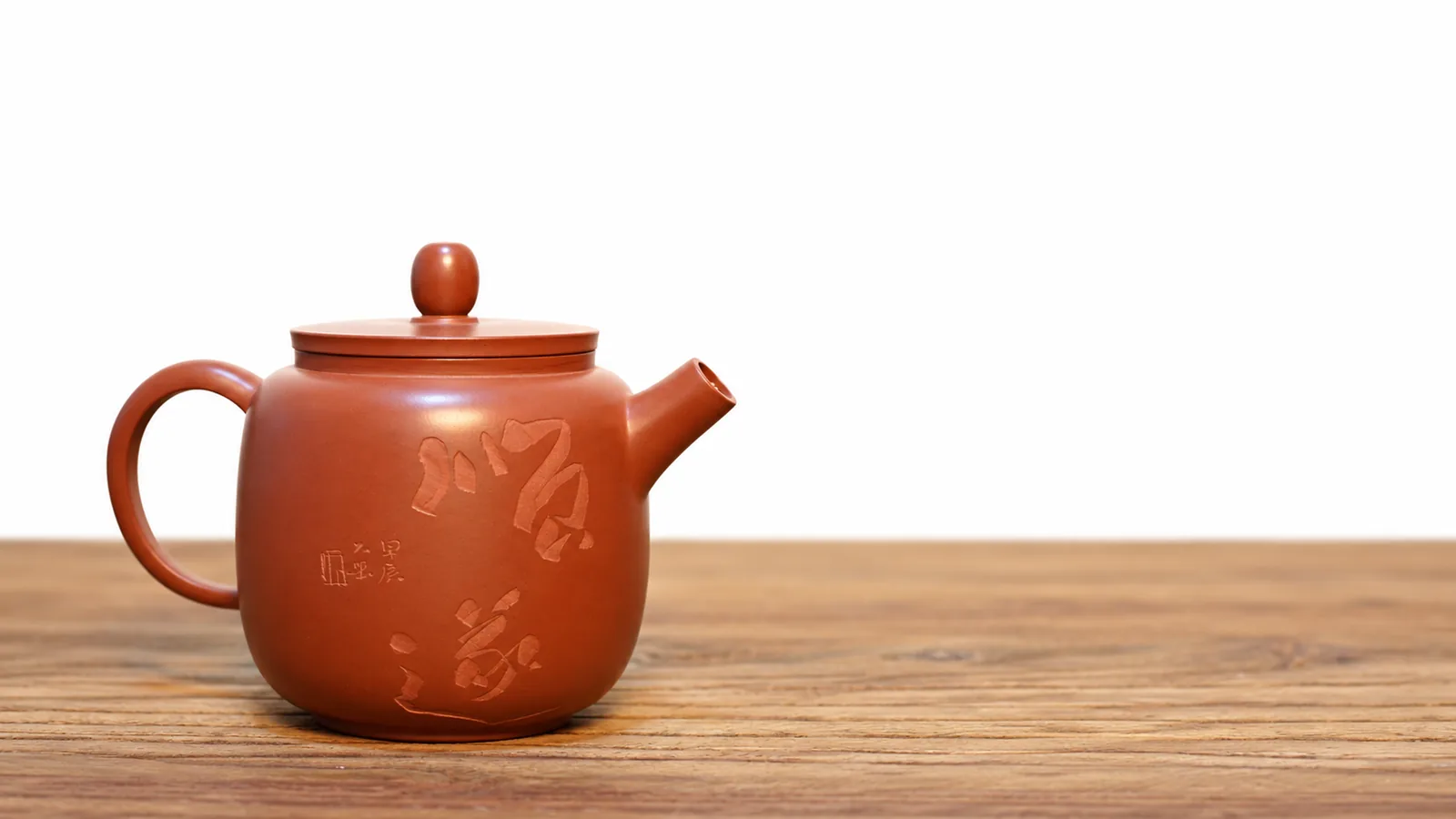
Ma Wuhong (马武宏) is a Nixing pottery artisan from Qinzhou, Guangxi, and the founder of Xianglong Nixing Pottery. His practice spans teapot design, forming and firing, with relief carving among his specialties. He works alongside his wife, Lao Weiping (劳伟萍), whose specialties include relief carving and lettering.
Raised in a pottery-making family, Ma encountered the craft early. In 2009, he graduated from Qinzhou University in ceramic art and design. He and Lao subsequently studied under Nixing pottery master Lu Jingping.
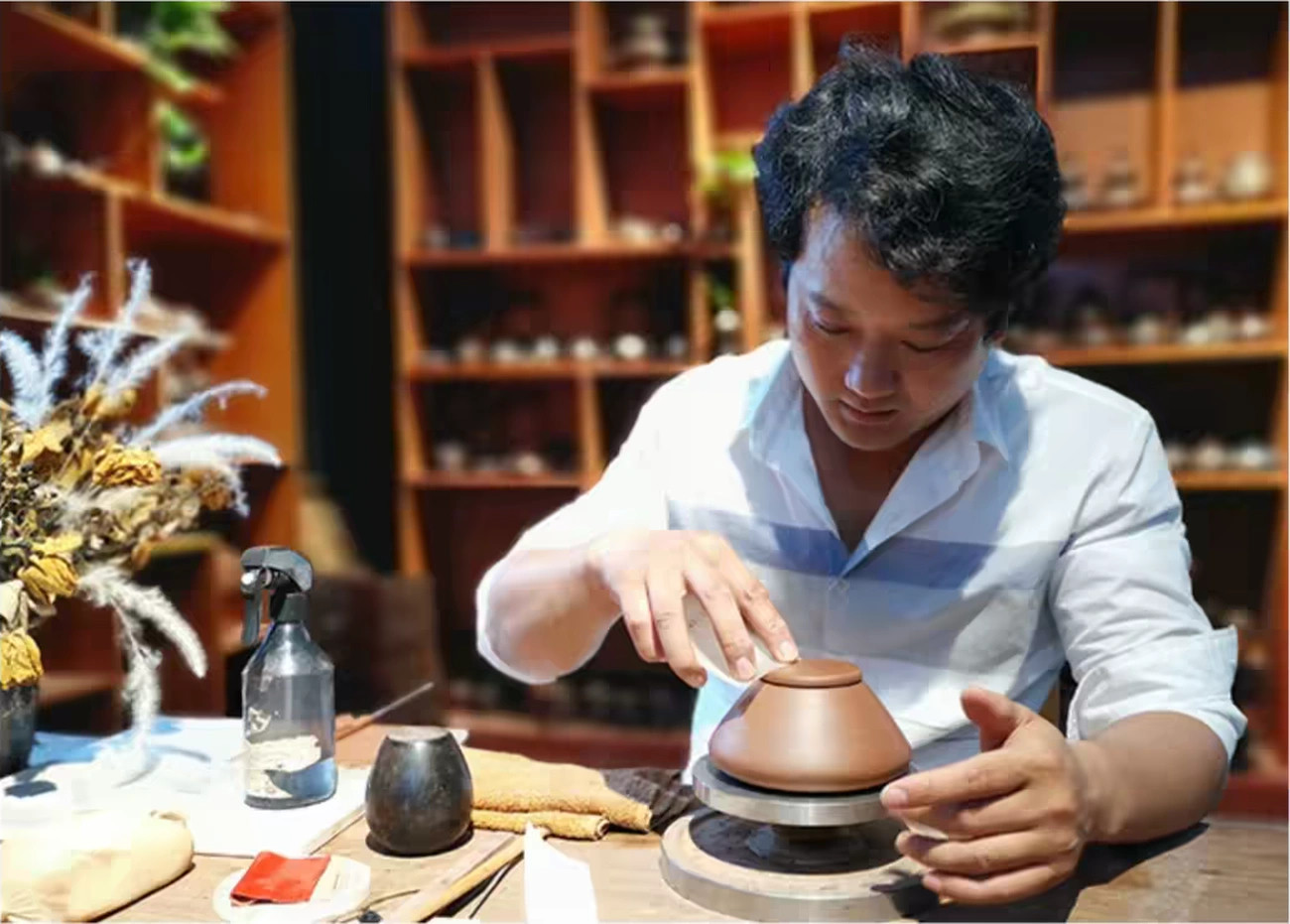
Ma holds a professional qualification in arts and crafts, specializing in Nixing pottery. His careful workmanship and individual approach have earned praise from senior artists. In the workshop photograph accompanying this profile, he is seated at a workbench, attending to a clay vessel, with shelves of pottery behind him.
A shared practice
Designing a teapot involves decisions about the whole vessel, while carving asks for close attention to its surface. Ma's work in design, forming on the wheel and firing brings these stages into his practice. Lao's relief carving and lettering add another area of experience to their collaboration, with subjects that include landscapes, flowers, birds and figures.
The forms associated with Ma's work include Xishi, Jinglan and Gongdeng teapots, as well as designs inspired by roots and other natural shapes. Gourd and bamboo reliefs on Xishi forms are among the decorative themes in his repertoire. Across these forms, the relationship between the vessel and its decoration remains a useful way to approach the work.
Relief and the teapot surface
Relief is one of the established approaches to decorating Nixing pottery. Parts of a design stand above the surrounding surface, catching light and creating small areas of shadow. On a rounded teapot, the image also follows a changing curve. The spacing of the motif and the depth of the relief affect how it appears as the vessel is turned.
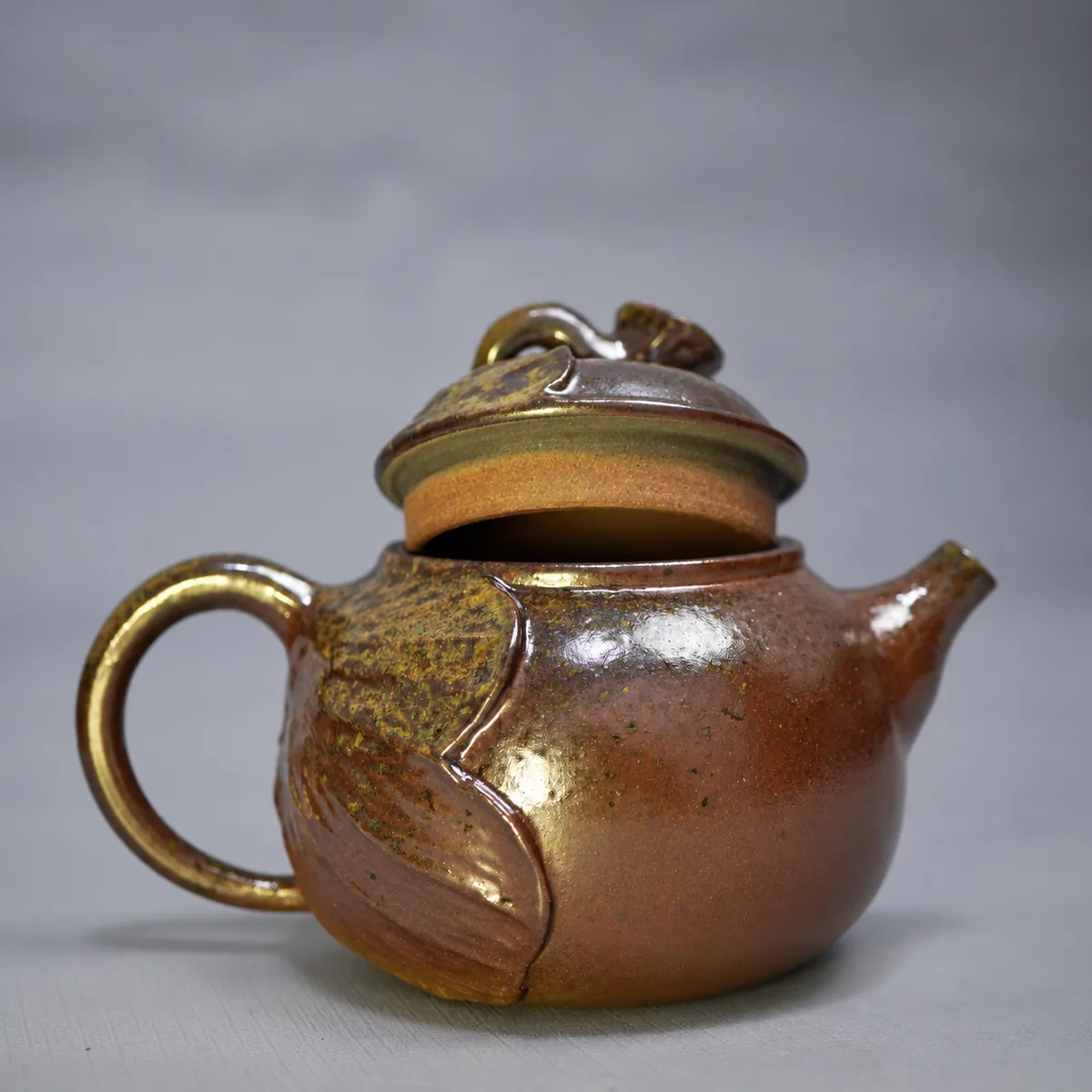
Published retailer listings offer specific examples attributed to Ma. Mud and Leaves has presented zodiac-themed Nixing teapots, including monkey and tiger reliefs, as well as a dragon carved on a rounded Xishi form. Tea Heads has featured a goldfish-themed Nixing teapot under the name Ma Wu Hong.
For readers new to the material, our introduction to Nixing pottery provides a starting point for understanding the broader craft and its home in Qinzhou.
Shared projects and recognition
Ma participated in the pattern design and carving of a commemorative teapot created for the opening of Nixing Village. The project brought together the planning of a decorative design and its execution on a ceramic form.
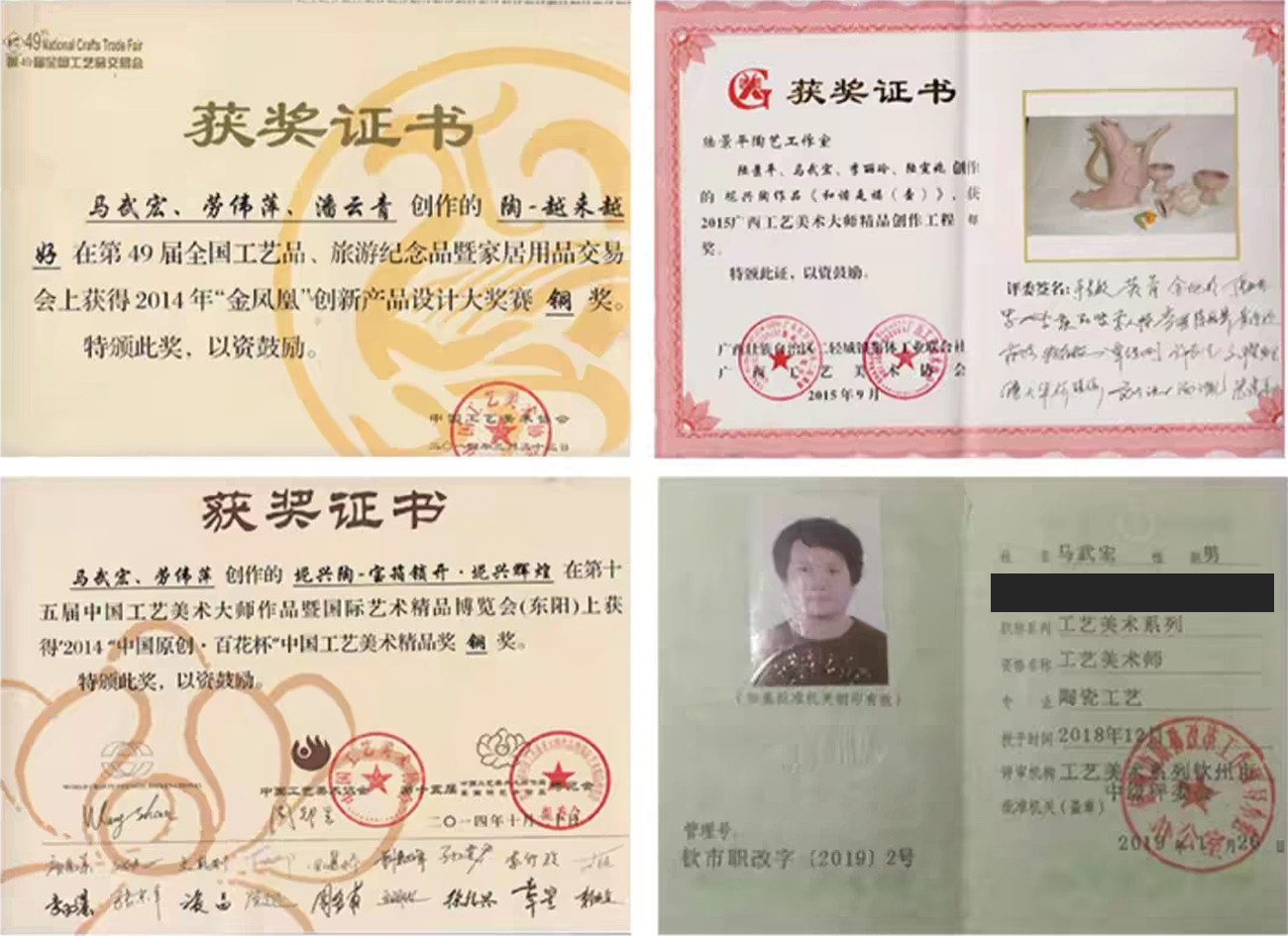
Works he co-created received bronze recognition in the 2014 Golden Phoenix Innovative Product Design competition, held at the 49th National Crafts, Tourism Souvenirs and Homeware Trade Fair, and the 2014 China Original Baihua Cup at the 15th Chinese Arts and Crafts Masters Works and International Art Expo in Dongyang.
A selection of his certificates and awards is shown below, including recognition for collaborative works and his professional qualification in Nixing pottery.
Selected certificates and awards
Maker’s marks and studio seals
Ma’s marks include 马武宏制, 祥龙 and 祥龙陶艺. 马武宏制 (Ma Wuhong zhi) means “Made by Ma Wuhong” and names the maker. 祥龙 (Xianglong) literally means “auspicious dragon” and is the name of his studio. The fuller 祥龙陶艺 reads “Xianglong Pottery,” identifying the studio rather than an individual maker. Marks are best read alongside the details and photographs of the individual piece.
When considering a teapot, take time to see how its shape supports the composition on its surface. A raised motif, a change of curve or a quieter area can each contribute to the whole. To continue exploring the craft, browse our current Nixing teaware collection in the shop.
Li Huajin is a Nixing pottery maker from Qinzhou, Guangxi, China.
He has worked with Nixing pottery since 2012 and spent more than a decade learning teapot making with traditional craft master Lai Jun. That long period of practice gave him a solid grounding in clay, form, and the practical demands of a working teapot.
A Maker Led by Observation and Ideas
Li does not work from a fixed line of repeatable designs. Instead, each piece often begins with a particular image, texture, or idea. A tree-bark surface, a crab on a lid, the shape of a leaf, a stone, or a familiar traditional form may become the starting point for a new teapot.
This way of working gives his pieces a wide range of character and keeps each one distinct. Rather than reproducing the same model, he responds to the possibilities of the clay and develops each form individually.
Wood-Fired, One by One
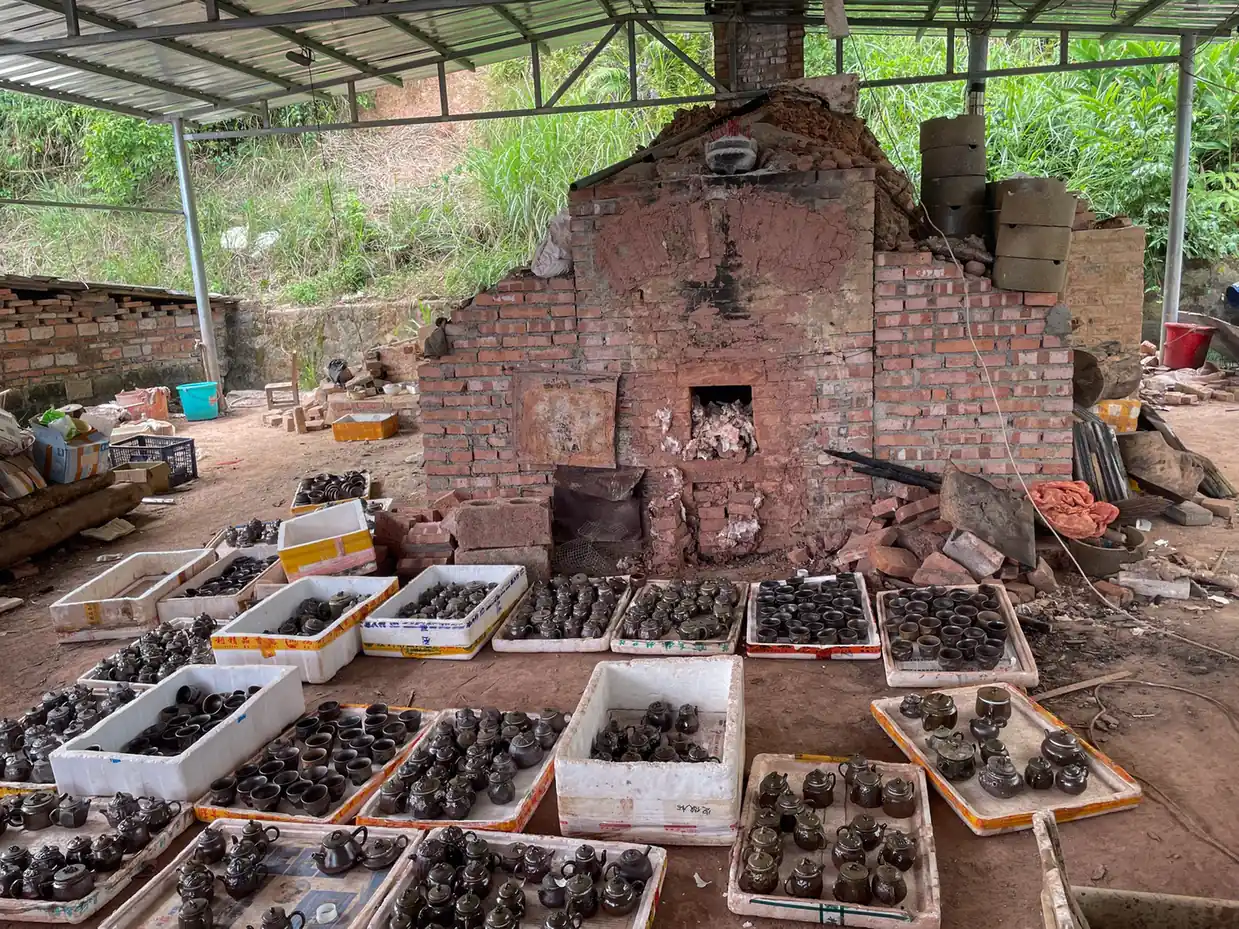
Every teapot from Li Huajin’s workshop is wood-fired. In a wood kiln, flame, ash, heat, and airflow do not affect every piece in the same way. The firing gives each teapot its own surface, with variations in colour, texture, sheen, and kiln marks that cannot be reproduced exactly.
The individuality of the form is therefore matched by the individuality of the firing. Even when two pieces share a similar idea, their final surfaces will differ because of their position in the kiln and the natural movement of flame and wood ash.
Made for Tea, Not Only Display
Alongside its visual character, each teapot is made with everyday use in mind. Li pays close attention to the proportion of the body, the fit of the lid, the shape of the spout, and the balance of the handle.
His work is imaginative, but it is also intended to be held, used, and enjoyed over many tea sessions. Each finished piece reflects both the maker’s hand and the unpredictability of unglazed pine wood firing. No two are exactly alike.
There is no single “correct” tea for a Nixing teapot. For most beginners, oolong tea, black tea, and pu-erh are practical places to start, then you can adjust based on your own taste and brewing routine. A Nixing teapot may suit different teas differently depending on its clay, firing, wall thickness, shape, capacity, interior finish, and how you brew.
The best approach is simple: start with a tea you already enjoy, make a few small sessions, and notice what works for you. Do you prefer a fuller texture, a brighter aroma, a smaller gongfu-style brew, or a larger pot to share? This guide explains how different tea categories may work in a Nixing teapot and how to choose a sensible starting point for your own tea table.
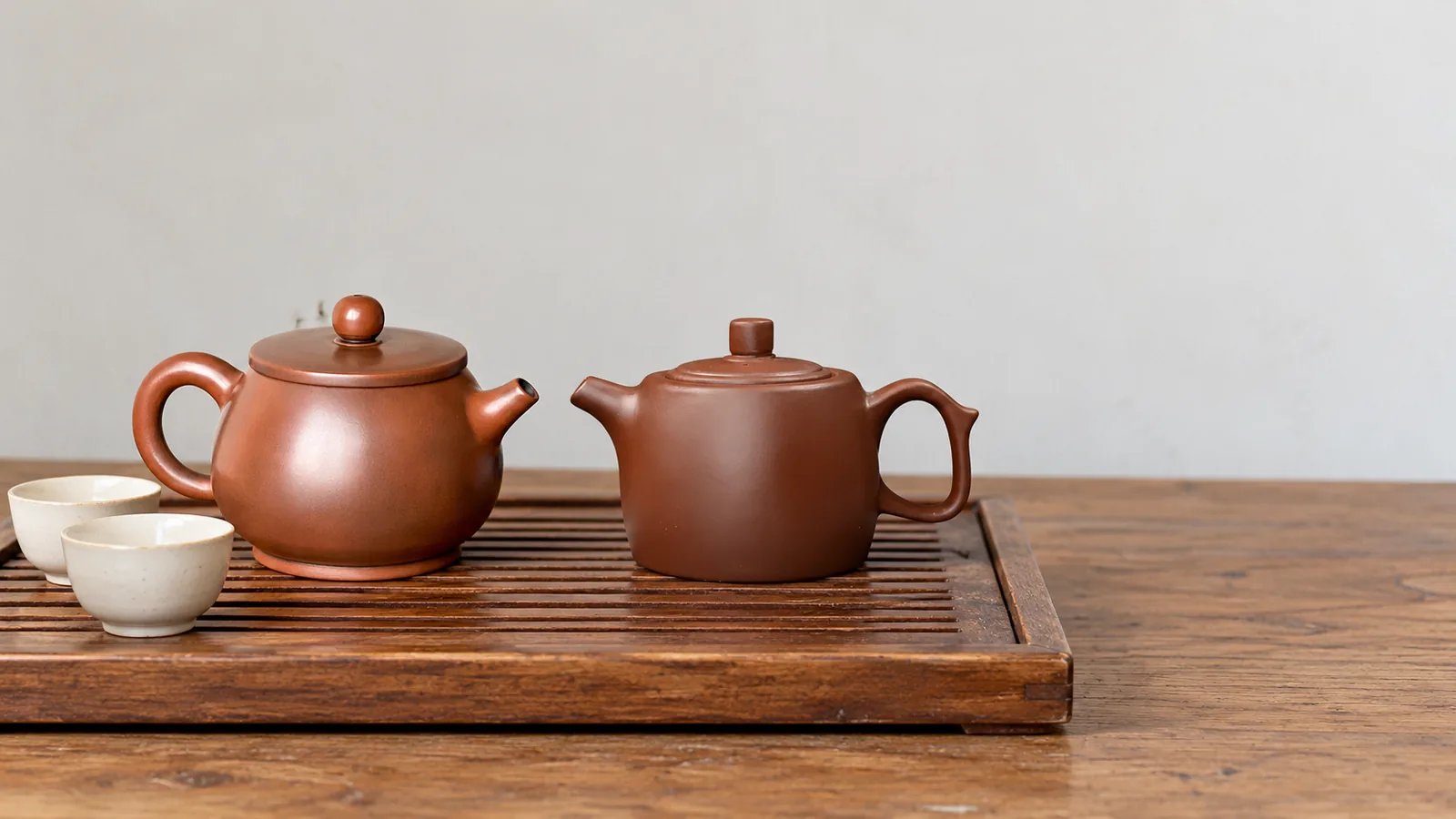
A Nixing pottery teapot for everyday tea brewing.
There Is No One “Best” Tea
A Nixing teapot does not come with one required tea pairing. Tea drinkers often develop preferences over time, but those preferences are personal rather than universal rules.
The experience may vary from pot to pot. A small, compact teapot may feel more suitable for short gongfu infusions, while a larger pot may be more practical for sharing. A thinner-walled pot and a thicker-walled pot can also behave differently during brewing. The same is true of the clay body, firing, lid fit, pour speed, and whether the interior is glazed.
Instead of looking for a perfect rule, begin with teas you already drink regularly. If you enjoy oolong, black tea, or pu-erh, those are all reasonable categories to try first. For a broader introduction to the material and tradition, read Nixing vs Yixing: What’s the Difference?
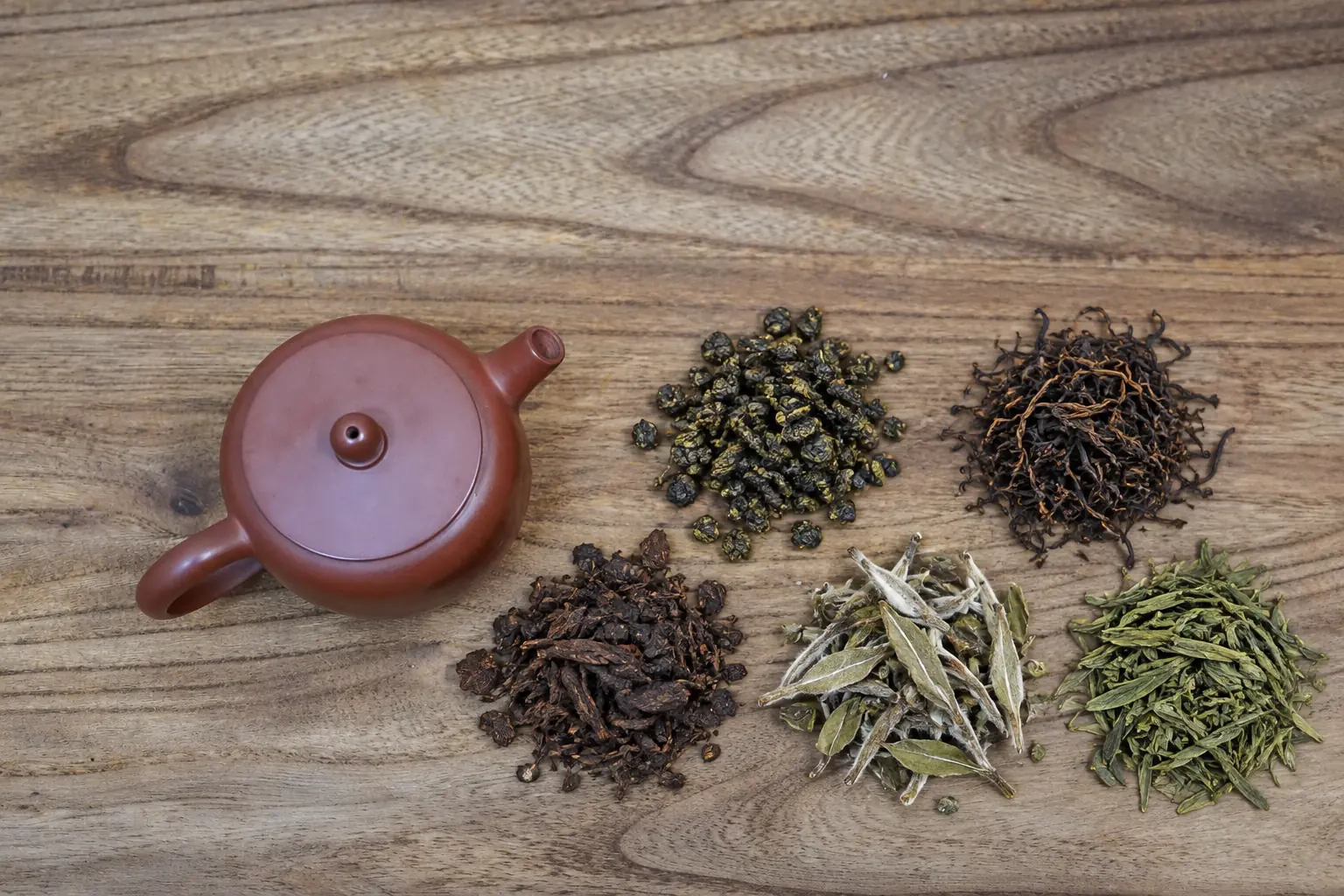
Try familiar teas first. The best pairing is often the tea you already enjoy and know how to brew. Compare a few tea styles over time instead of expecting one universal answer.
A Nixing teapot can be explored with different loose-leaf tea styles, from oolong and black tea to pu-erh, white tea, and green tea.
Oolong Tea: A Good Place to Start
Oolong tea can be a good starting point for many Nixing teapot owners because it includes a wide range of styles—from light and floral to roasted and full-bodied.
If you already enjoy Taiwanese-style oolongs, Wuyi rock tea, Tieguanyin, or roasted oolongs, try brewing a familiar tea in your pot before changing too many variables. Use your normal leaf amount, water temperature, and infusion time. Then compare the result with the same tea brewed in porcelain or another vessel you know well.
Many tea drinkers prefer small pots for gongfu-style oolong brewing because they allow short, repeated infusions. However, the best capacity depends on how many people are drinking and how you prefer to serve tea.
Black Tea and Dark Tea
Black tea and dark tea can also be worth trying in a Nixing teapot, especially if you enjoy richer, warmer tea styles.
For black tea, begin with a moderate leaf-to-water ratio and adjust gradually. Some black teas can become strong quickly, so a smaller pot may make it easier to control each infusion. A larger pot may be more convenient for relaxed daily brewing or serving several people.
Dark teas, including some post-fermented styles, may also suit a dedicated brewing routine. But “suitable” does not mean exclusive. You can brew them in porcelain, glass, or other teaware as well. The aim is to find a vessel and method that help you enjoy the tea.
Pu-erh Tea: Start with a Small Test Brew
Pu-erh is commonly brewed in small teapots, particularly in gongfu tea sessions. If you are considering a Nixing teapot for pu-erh, start with a small test brew rather than assuming every pot will produce the same result.
Try using a tea you already know. Brew a few short infusions and pay attention to aroma, body, clarity, and how easy the pot feels to pour and handle. If you switch between very different teas—for example, floral oolong and ripe pu-erh—you may eventually prefer separate pots. That is a personal choice, not a requirement.
A smaller Nixing pot may be useful when you want to make repeated, focused infusions. If you usually share tea with friends, a medium or larger capacity may be more practical.
White Tea and Green Tea: Use a Gentler Approach
White tea and green tea can also be brewed in a Nixing teapot, but they may benefit from a gentler approach.
These teas are often brewed with cooler water and shorter infusions than darker or more heavily roasted teas. If your pot has thick walls or retains heat well in your own use, pay close attention to water temperature and steeping time. Starting with slightly cooler water can be worth trying, especially for delicate green teas.
If you want a very clear view of a green or white tea’s aroma and color, porcelain or glass can be a useful comparison vessel. This does not mean a Nixing teapot is wrong for these teas; it simply gives you another reference point while you learn your preferences.
How Teapot Size Changes Your Choice
Capacity can shape your tea experience as much as tea type.
Teapot Capacity
Useful Starting Use
Around 80–120 ml
Solo gongfu sessions or one to two people
Around 120–180 ml
Flexible for one to three people
Around 200–300 ml
Sharing tea, casual brewing, or serving several people
A small pot can make it easier to brew short, concentrated infusions. A larger pot may feel more relaxed and practical when tea is shared. Consider not only how much tea you want to make, but also how quickly you like to drink it and whether you prefer several short infusions or one longer brew.
You do not have to use one Nixing teapot for only one tea type.
Some tea drinkers prefer to dedicate an unglazed pot to a particular tea family, such as roasted oolong, black tea, or pu-erh. They may do this for consistency or simply because they enjoy having a routine. Others use one pot for several related teas without concern.
A practical beginner approach is to start with one tea you drink often. Use the pot consistently for a few weeks, then decide whether you want to keep that pairing or try something else. There is no need to rush into buying multiple pots or following strict rules.
Whatever tea you choose, simple care matters. Rinse the pot with hot water, avoid soap or scented cleaners, remove used leaves after brewing, and allow the pot to dry fully. For more details, see our Nixing teapot care guide.
A Simple Starting Guide for Beginners
If you are new to Nixing teaware, use this guide as a starting point:
If You Usually Drink…
Try Starting With…
Keep in Mind
Oolong tea
A familiar oolong, brewed gongfu-style
Adjust leaf amount and infusion time before changing teas
Black tea
A tea you already drink regularly
Start moderately; black tea can become strong quickly
Pu-erh tea
A small test session with a familiar pu-erh
Consider a smaller pot for short repeated infusions
White tea
A gentle first brew with cooler water
Watch temperature and steeping time
Green tea
A gentle brew with cooler water
Compare with porcelain or glass if you want a reference point
Many tea types
Start with your most frequently brewed tea
One pot can be used flexibly; separate pots are optional
The goal is not to find a “perfect” pairing immediately. It is to learn how your specific pot works with the teas you enjoy.
Frequently Asked Questions
Is oolong the best tea for a Nixing teapot?
Oolong is a good place to start for many people, but it is not the only good choice. Black tea, pu-erh, dark tea, white tea, and green tea can also be worth trying.
Can I brew green tea in a Nixing teapot?
Yes. Use gentler brewing conditions, especially cooler water and shorter infusions. Porcelain or glass can also be useful if you want to compare results.
Should I use one Nixing teapot only for pu-erh?
No. Some tea drinkers prefer a dedicated pot for pu-erh, but it is a personal habit rather than a requirement.
What size Nixing teapot should a beginner choose?
A smaller pot around 80–120 ml can be a practical starting point for solo gongfu brewing. Choose a larger size if you usually share tea.
Will a Nixing teapot automatically make tea taste better?
Not necessarily. The result depends on the individual pot, tea, water, temperature, leaf amount, and brewing method. It is best to test and compare based on your own taste.
Conclusion
The best tea for a Nixing teapot is usually the tea you enjoy drinking often. Oolong, black tea, and pu-erh are sensible places to begin, while white and green teas can work well with gentler brewing. Start with a familiar tea, pay attention to capacity and brewing style, and adjust gradually as you get to know your pot.
Explore Nixing Teapots to find a Nixing teapot that fits your preferred tea style and daily brewing routine.
If you are interested in Chinese tea ware, you may already know Yixing zisha teapots. Nixing pottery—also called Nixing ware or Nixing Tao—is another distinct Chinese pottery tradition worth exploring.
Both are used for tea, and both can be valued for craftsmanship, form, and the pleasure of daily brewing. But they are not the same. They come from different regions, use different regional materials, and should be described honestly as separate traditions.
This guide compares Nixing pottery and Yixing zisha to help you choose a teapot based on your tea preferences, brewing style, capacity needs, and budget.
Nixing pottery teapot on the left and Yixing zisha teapot on the right.
Nixing Pottery and Yixing Zisha at a Glance
Feature
Nixing Pottery
Yixing Zisha
Origin
Qinzhou, Guangxi, China
Yixing, Jiangsu, China
Material
Pottery clay associated with the Nixing tradition of Qinzhou
Zisha clay associated with the Yixing region
Appearance
Can range from warm reddish-brown to dark tones; often features distinctive forms or carved decoration
Often seen in purple-brown, red, or lighter clay tones; known for compact teapot forms and clay texture
Making
May be hand-thrown, hand-finished, carved, or made through other pottery processes
May be fully handmade, half-handmade, or mold-formed, depending on the piece
Suitable tea use
Chosen according to the specific pot, tea type, and personal brewing preference
Also chosen according to the individual pot, tea type, and personal brewing preference
Care
Rinse with water, avoid soap, and dry thoroughly
Rinse with water, avoid soap, and dry thoroughly
Price
Varies by material, craftsmanship, design, size, and maker
Varies by clay, craftsmanship, maker, age, and collectibility
Best for
Tea drinkers seeking Nixing craftsmanship, expressive design, or a daily gongfu tea vessel
Tea drinkers drawn to the Yixing zisha tradition, classic small-pot brewing, or collecting
The key point is simple: Nixing pottery is not Yixing zisha, and Yixing zisha is not Nixing pottery.
Different Regions, Different Traditions
Nixing pottery comes from Qinzhou, Guangxi, in southern China. It is a regional pottery tradition with its own materials, methods, forms, and artistic expression.
Yixing zisha comes from Yixing, Jiangsu, in eastern China. It is widely known for small teapots used in gongfu-style tea brewing.
Because both may appear under broad terms such as “Chinese clay teapot” or “gongfu teapot,” it is easy for new tea drinkers to confuse them. However, a teapot should be identified by its actual origin and material—not labeled as Yixing simply because Yixing zisha is more familiar in international tea markets.
Material and Surface: Look Beyond Color
The color of a teapot alone does not tell you everything about its material, quality, or brewing behavior.
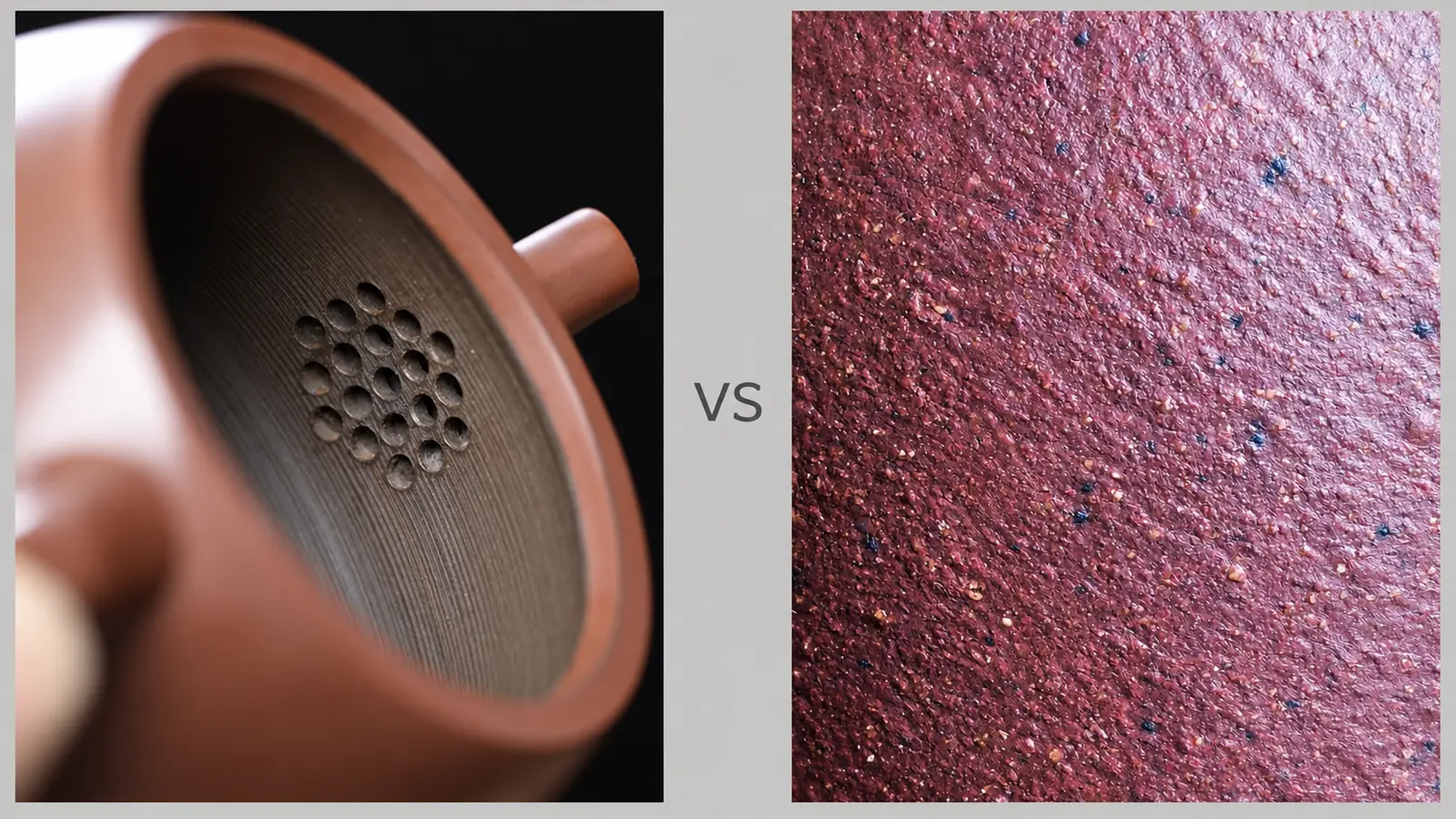
Nixing ware uses clay associated with the Qinzhou Nixing tradition. Depending on the individual piece, firing, finishing, and design, its surface may appear reddish-brown, dark brown, gray, or nearly black.
Yixing zisha is associated with clay from the Yixing area. It is often discussed through names such as zisha, zini, hongni, and duanni. These terms should be used carefully: color or online product photos alone are not enough to verify a clay type or authenticity.
Detail comparison: Nixing pottery on the left and Yixing zisha on the right.
It is best not to assume that one clay is always more porous, more breathable, or better for every tea. The final brewing experience is influenced by the specific material, firing, wall thickness, pot shape, interior finish, water, tea leaves, and your own brewing method.
Appearance and Craftsmanship
Both Nixing and Yixing tea ware can be simple, functional, decorative, or highly artistic.
Nixing pieces are often appreciated for their varied surfaces and expressive craftsmanship. Some are plain and form-focused, while others feature hand-carved scenes, calligraphy, or traditional motifs.
Yixing zisha teapots are often recognized for compact, balanced forms and the visual character of the clay. They can also be engraved or decorated, but many tea drinkers appreciate their restrained and practical designs.
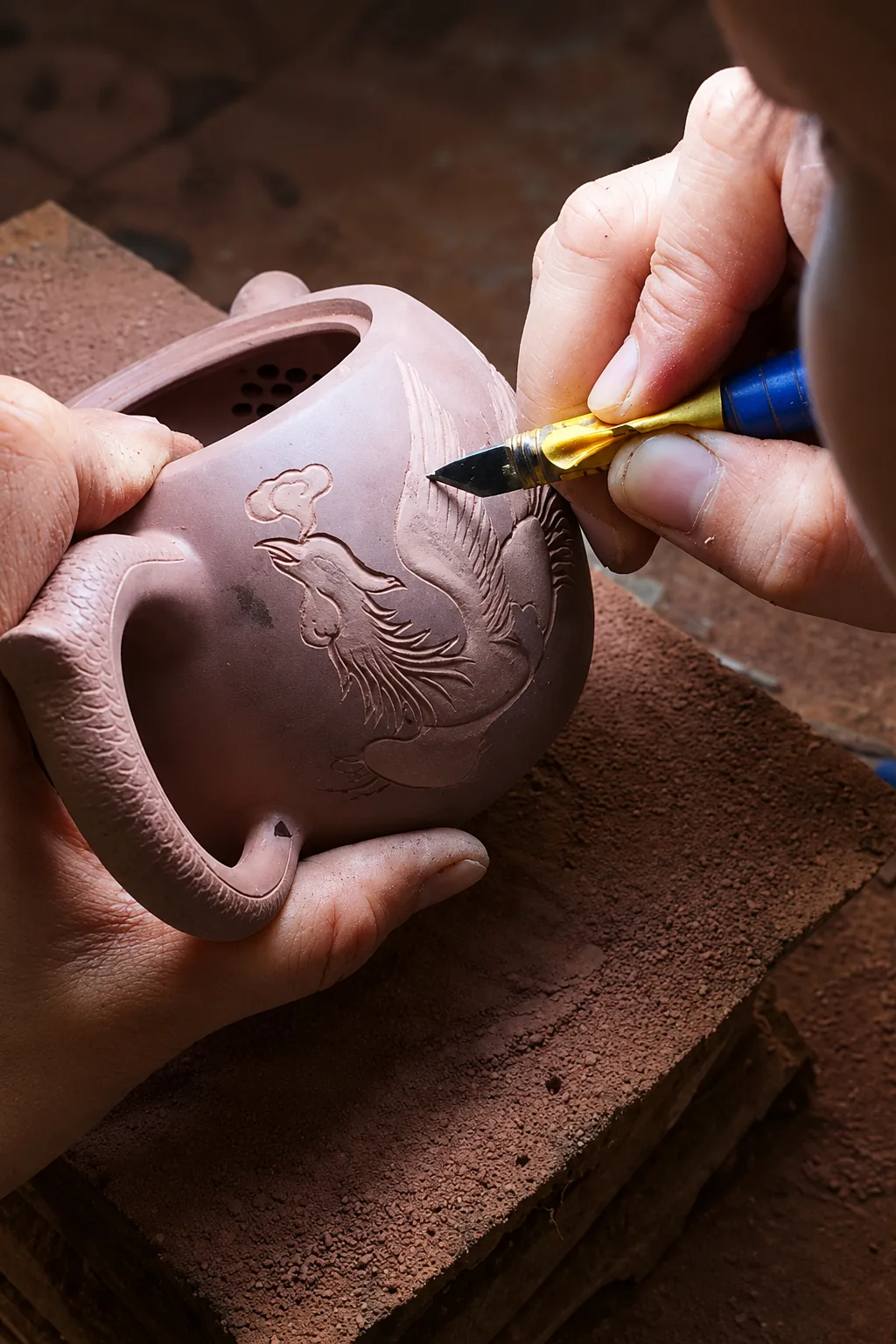
An artisan hand-carving a decorative motif into a Nixing teapot before firing.
“Handmade” can describe different levels of handwork. A pot may be fully handmade, hand-finished after molding, or produced with some mechanical assistance. When shopping, look for clear product details about production method, interior finish, capacity, and place of origin.
Which Teas Can You Brew?
There is no universal rule that says Nixing or Yixing is only suitable for one type of tea. The right pairing depends on the individual vessel and your taste.
Many tea drinkers use smaller clay teapots for teas they brew regularly, such as:
Oolong tea
Black tea
Pu-erh tea
Dark tea
Roasted or aromatic loose-leaf teas
If you drink many strongly different teas, such as floral teas, scented teas, roasted oolongs, and ripe pu-erh, you may prefer separate brewing vessels. Porcelain, glass, and glazed tea ware are also useful when you want easy cleaning and greater flexibility.
Rather than asking which clay is “best,” ask:
Which teas do I drink most often?
Do I want one pot for daily use or separate pots for different tea families?
Do I brew alone, for two people, or for a group?
Do I value decoration, classic form, daily practicality, or collectibility most?
Choosing the Right Capacity
Capacity is one of the most practical factors when choosing a teapot.
For gongfu tea, smaller pots are often used for concentrated, short infusions. Larger pots can be more convenient for sharing tea or for casual daily brewing.
Capacity
A Practical Starting Point
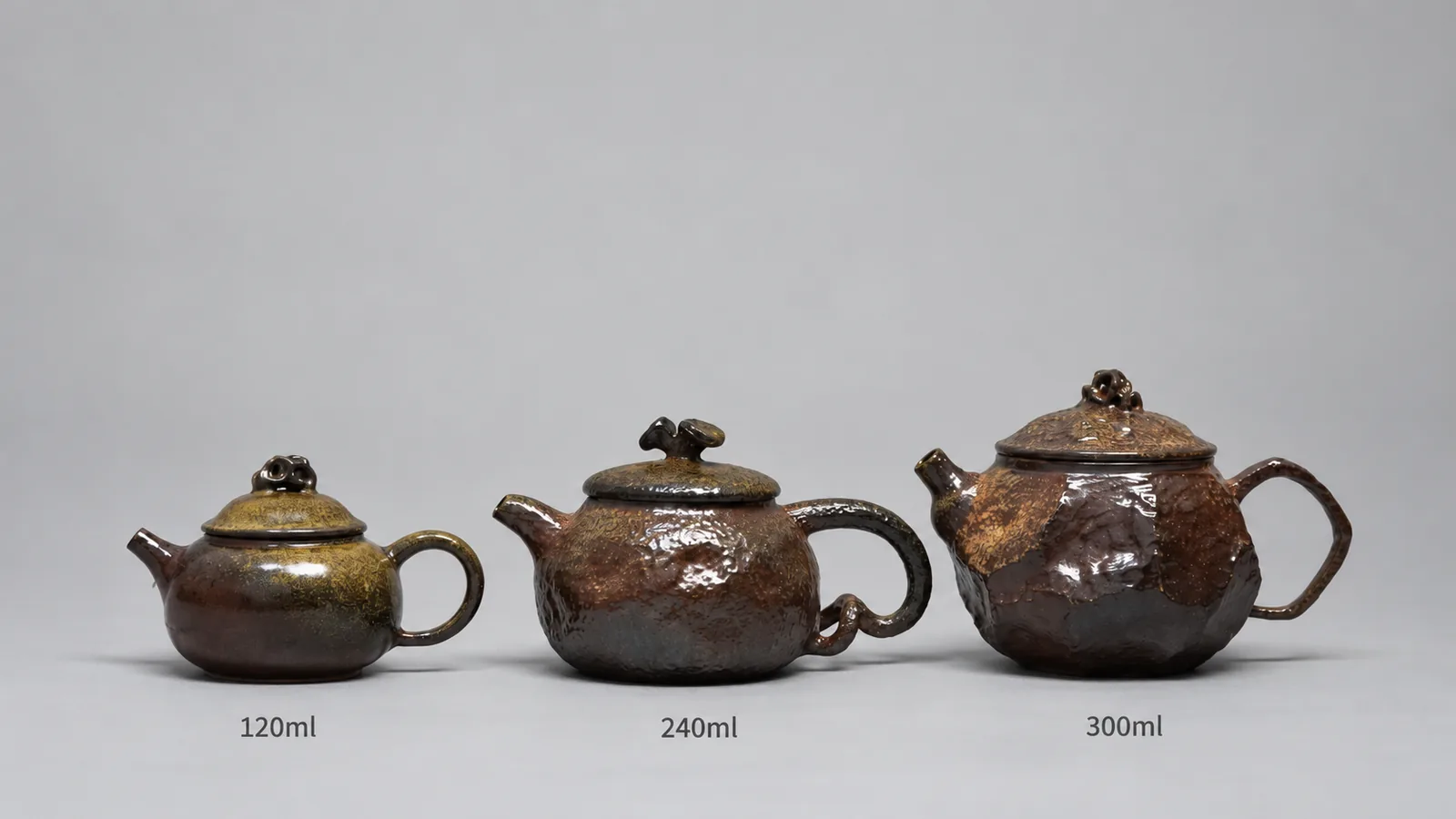
120 ml
A good size for solo gongfu tea or a small session for one to two people
240 ml
A flexible size for sharing tea with two to four people
300 ml
A practical option for serving several people or brewing a larger volume at once
These are practical starting points, not strict rules. The right size also depends on how much leaf you use, your preferred infusion style, and the number of people at your tea table.
Care: Keep It Simple
For both Nixing pottery and Yixing zisha, simple care is generally best:
Rinse the teapot with hot water before and after use.
Avoid dish soap, scented cleaners, and abrasive scrubbers.
Remove tea leaves after the session.
Allow the teapot to air-dry completely.
Store it in a dry, odor-free place.
If the inside of a pot is glazed, follow the seller’s care instructions for that specific piece. For further guidance, read our guide to caring for Nixing pottery.
Price and Buying with Confidence
Nixing and Yixing tea ware are both available across a wide range of prices. Price may reflect material sourcing, craftsmanship, the amount of handwork, carving, maker reputation, size, rarity, and retail support.
For a first purchase, choose a pot with clear information and a capacity that fits your real tea-drinking habits. Be cautious of unsupported claims about rare clay, guaranteed changes in tea flavor, historical status, or health benefits.
Nixing vs Yixing: Which One Should You Choose?
Choose a Nixing pottery teapot if you:
Want to discover a tea tradition beyond the better-known Yixing category
Enjoy distinctive forms, darker or warmer surfaces, or hand-carved decoration
Want a teapot for regular gongfu-style brewing
Value transparent product information and individual craftsmanship
Choose a Yixing zisha teapot if you:
Are specifically interested in the Yixing zisha tradition
Enjoy classic small-teapot gongfu brewing
Want to develop a dedicated tea-brewing routine
Have found a trusted seller and a pot suited to your needs
Choose porcelain, glass, or glazed tea ware if you want one flexible vessel for many tea types or prefer easier cleaning.
Explore Nixing Ware Teapots
Find a Nixing pottery teapot that fits the way you drink tea—whether you prefer a compact 120 ml pot for solo gongfu sessions, a 240 ml pot for sharing, or a larger 300 ml pot for a relaxed tea table.
No. Nixing pottery is associated with Qinzhou, Guangxi, while Yixing zisha comes from Yixing, Jiangsu. They are distinct pottery traditions.
Is Nixing better than Yixing?
Neither is universally better. The right choice depends on your tea preferences, brewing habits, design taste, budget, and confidence in the seller’s product information.
Can I use a Nixing teapot for different teas?
Yes. However, if you use an unglazed pot, many tea drinkers prefer to use it consistently for one tea family or a small group of similar teas.
What Nixing teapot capacity should I choose?
A 120 ml pot is a useful starting size for solo gongfu tea; 240 ml is more flexible for sharing; and 300 ml is suitable when serving several people or brewing a larger volume.
Nixing pottery is unglazed tea ware made in Qinzhou, Guangxi, from finely prepared local mineral clay. Known for its dual-porosity structure, steady heat retention, and practical brewing character, it is a natural choice for tea drinkers who enjoy aged Liubao, ripe pu-erh, and Wuyi rock tea.
Where Nixing Pottery Comes From
Nixing pottery comes from Qinzhou, on China’s Guangxi coast. Its clay tradition is linked to mineral-rich deposits around the Qinjiang River. The clay is prepared from local raw materials, then shaped and fired into unglazed teaware. The result is neither porcelain nor glazed stoneware: the surface remains clay, allowing its texture and patina to develop through regular use.
Fine, Unglazed Clay Without Chemical Additives
Every Nixing Ware piece is bare-fired and unglazed. Whether a form is made by hand, press molding, or slip casting, the fine original clay does not require chemical additives. Responsible clay preparation begins with tightly controlled raw-material sourcing and batch testing, so the material used for tea ware is carefully monitored.
Without a glaze layer, the clay surface is direct and tactile. With normal tea use, it may gradually gain a softer, deeper patina rather than remaining visually unchanged.
Dual Porosity, Heat Retention, and Tea Brewing
Nixing clay is valued for a fine dual-porosity structure: tiny pores help the vessel exchange air gently while the clay body holds heat. This does not replace good tea or careful brewing, but it can support a stable infusion, especially with fuller-bodied teas.
Aged Liubao: steady heat suits its dark, mellow profile.
Ripe pu-erh: a warm, rounded brewing environment works well with its rich texture.
Wuyi rock tea: a compact pot can help maintain heat for roasted oolongs and repeated short infusions.
Crafting: From Clay to Teapot
Nixing pottery can be formed by hand, press molding, or slip casting. The method affects the production process, but every successful tea vessel still depends on clay elasticity, wall thickness, lid fit, spout flow, trimming, and careful drying before firing. Hand-carved decoration is added before firing, when the clay is firm enough to hold a crisp line.
How Nixing Pottery Is Fired
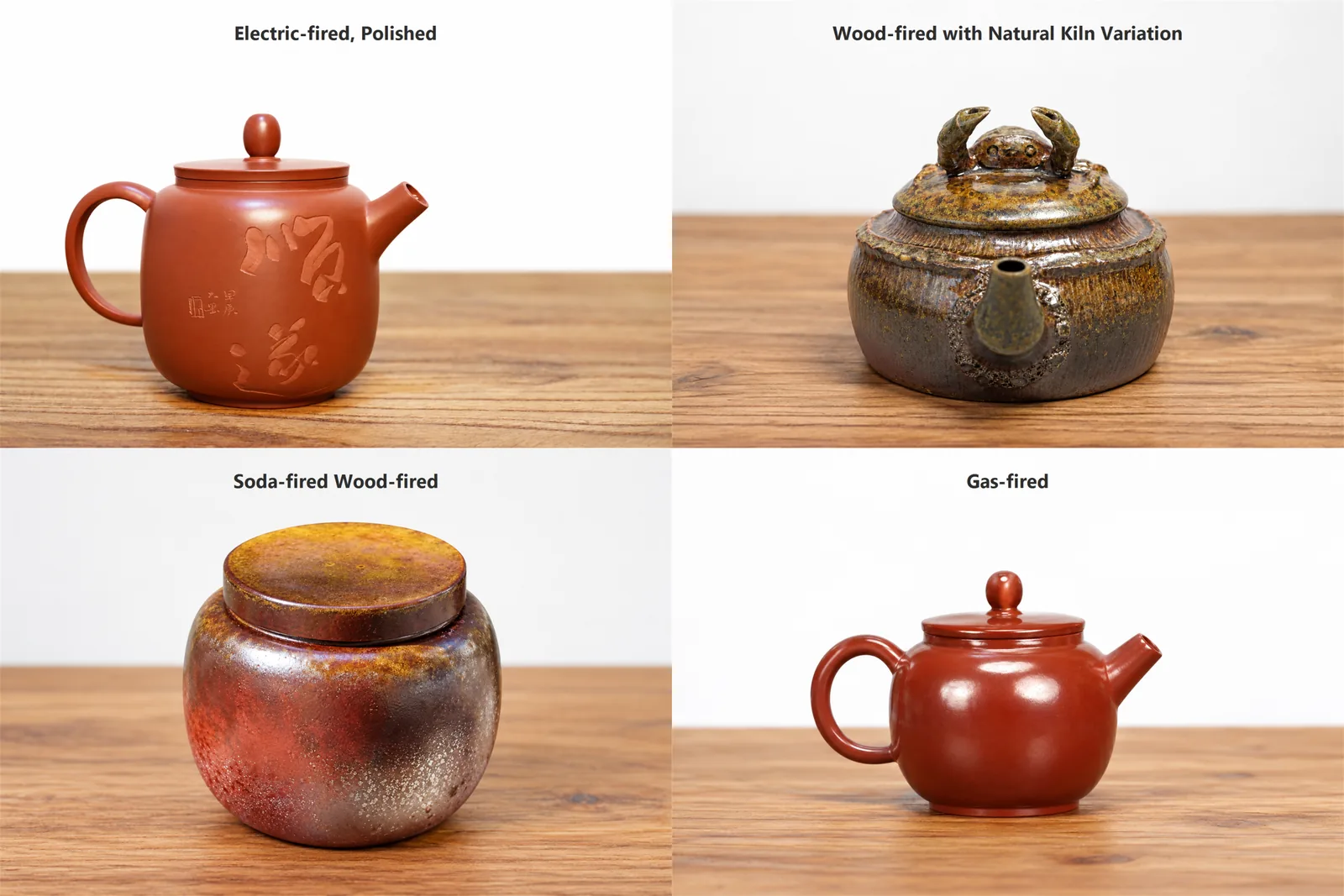
Firing method changes the appearance of a Nixing piece, but every method remains unglazed. It is important to use the terms precisely: only wood-fired Nixing pottery has natural kiln variation. Electric-fired, gas-fired, and soda-fired pieces should not be described as having kiln variation.
Electric-Fired
Electric firing offers controlled, repeatable heat. After firing, electric-fired Nixing pottery is usually hand-polished; some workshops carry out a second firing after polishing to make the surface smoother. This finish is not glaze.
Wood-Fired: Natural Kiln Variation
In a wood kiln, flame, ash, heat, and atmosphere move around the ware. Their interaction with the unglazed clay can create natural surface variation from one piece to another. At Nixing Ware, this wood-fired result is the only firing effect we call natural kiln variation.
Soda-Fired Wood Firing
Soda firing is generally used with wood firing. Soda introduced during firing can create brighter color and a more vivid surface. It is a legitimate technique, and when a Nixing Ware teapot uses it, the product page will state this clearly.
Gas-Fired
Gas firing surrounds the ware with direct flame, which can produce a bright surface—sometimes brighter than an electric-fired piece. It is not glaze and it is not natural kiln variation.
Choosing Capacity for Your Tea Habit
Choose capacity around how you brew, not only around appearance. A smaller teapot is useful for focused gongfu sessions; a larger one suits a longer shared table session or tea that benefits from more water at once.
90–140 ml: a practical range for one or two people and concentrated gongfu brewing.
150–220 ml: useful for sharing with two to four people or for a relaxed daily pot.
Match the tea: darker teas and roasted oolongs often reward a compact pot and short, repeated steeps.
First Use and Everyday Care
Unglazed Nixing pottery is simple to care for. Rinse it with hot water before its first use, then let it dry fully between sessions. Avoid detergents, abrasive pads, and sudden temperature changes. Use clean water, empty the pot after brewing, and allow air circulation before storing it. Over time, regular tea use can build a natural patina.
A Practical Clay for Everyday Tea
Nixing pottery brings together unglazed Qinzhou clay, thoughtful craftsmanship, and several distinct firing approaches. When choosing a piece, consider the maker’s form, capacity, firing method, and the teas you brew most often. For a closer comparison with another Chinese clay tradition, read our guide to Nixing pottery and Yixing zisha.
Caring for Nixing pottery does not need to be complicated. For everyday tea use, the essentials are gentle cleaning, complete drying, gradual changes in temperature, and attention to the instructions supplied with the individual piece. Nixing Ware tea vessels are unglazed, so their surfaces should be treated with simple, practical care rather than strong cleaners or elaborate rituals.
A teapot, cup, or tea pet may have a different shape, firing result, or surface feel, so handle each one thoughtfully. Wood-fired Nixing pottery can develop a reflective, almost mirror-like surface during high-temperature firing. This is a natural firing result, not an applied glaze. With normal use, an unglazed surface may also show gentle changes in colour or sheen. The aim is not to keep the piece looking unused; it is to keep it clean, dry, and pleasant to brew with.
Before First Use: Keep It Simple
Before using a new Nixing teapot, cup, or tea pet, inspect it in good light. Check for obvious cracks, loose parts, sharp damage, or signs of shipping damage. If something appears damaged, do not use it with hot water; contact the seller for advice.
For a Nixing teapot, prepare it before the first brewing session. This simple first rinse is often called “opening the pot.” It is intended to remove any remaining dust from handling and storage, not to create a magical effect or change the tea.
Rinse the teapot under warm water two or three times.
Fill it with boiling water, then carefully empty it out.
Repeat the boiling-water fill and empty process two or three times.
Allow the teapot to cool naturally. It is then ready for tea.
Avoid adding tea leaves, toothpaste, oil, vinegar, baking soda, chemicals, or other materials during this first preparation. If the seller gives a specific first-use instruction for a particular product, that instruction takes priority.
How to Brew Tea in a Nixing Teapot
Before brewing, warm the teapot gradually. Pour in warm or hot water, let the vessel warm briefly, and pour the water away. This reduces the shock of moving from room temperature to brewing temperature. In a cool room, take a little more time before using very hot water.
Choose water temperature and steeping time for the tea rather than for the pot. Different teas need different treatment, and a simple approach is usually best. For more guidance on tea choices, read What Tea Is Best for a Nixing Teapot?. When the session is over, empty the remaining tea liquor and remove the leaves promptly. Leaving wet leaves or strong tea inside for a long time can create stale odours and makes cleaning harder.
Do not move a hot pot directly into cold water or place a cold vessel under very hot water without warming it first. Like other ceramic tea ware, Nixing pottery benefits from gradual heating and cooling.
Daily Cleaning: The Gentle Method
Pour away used leaves and any remaining tea liquor after the session.
Rinse the inside and outside with clean warm water.
Use a soft, clean, unscented cloth to gently dry the outside.
Leave the lid off and let the vessel air-dry completely in a well-ventilated place.
Store the piece only after it is fully dry.
For normal tea use, clean water is the most reliable cleaner. Do not use strongly scented washing-up liquid, bleach, abrasive cleaners, or products that can leave a residue. Do not scrub with steel wool, hard brushes, or scouring pads. If a mark does not come away with water and a soft cloth, do not immediately use a stronger product; ask the seller for guidance for that particular piece.
Unglazed Nixing Pottery and Wood-Fired Surfaces
All Nixing Ware products are unglazed. An unglazed clay surface can develop subtle use marks, tea tones, and changes in sheen over time. These changes do not automatically mean that the pottery is damaged. They are often simply part of regular use.
Wood-fired Nixing pieces may look especially glossy because high heat and the kiln atmosphere can create a smooth, reflective surface. This appearance is not glaze. Care remains the same: rinse with water, dry thoroughly, and avoid chemicals or abrasive tools. If you notice a persistent unexplained odour, visible mould, a clear crack, leakage, or another unusual surface change, stop using the item and consult the seller or a suitable professional.
Strongly scented washing-up liquid, bleach, or harsh chemical cleaners.
Dishwashers, microwaves, or ovens unless the specific product is clearly marked as safe for that use.
Sudden changes between hot and cold temperatures.
Leaving tea leaves or tea liquor in the vessel for long periods.
Sealing a damp teapot in a cupboard or storage box.
Hard brushes, steel wool, scouring pads, and abrasive cleaning products.
Continuing to use a pot that has an obvious crack or a suspected leak.
A Simple Do / Avoid Table
Do
Avoid
Rinse with clean warm water.
Harsh or strongly scented cleaners.
Let the vessel air-dry fully.
Storing it sealed while damp.
Warm the pottery gradually before hot brewing water.
Sudden hot-to-cold or cold-to-hot changes.
Follow product-specific instructions.
Assuming dishwasher safety without confirmation.
Check regularly for obvious cracks or damage.
Hard brushes or abrasive scrubbing.
How to Store Nixing Pottery
Store Nixing pottery only after it has been cleaned and dried completely. For a teapot, do not seal the lid tightly over the opening during storage; leave a small amount of airflow. Choose a dry cupboard away from direct sun, steam, and places where the piece can be knocked over. When storing several tea items together, place a soft cloth or separator between them to prevent rubbing or impact.
Good storage is uncomplicated: dry, stable, clean, and protected from knocks. A clean pot that is fully dry is easier to enjoy at the next tea session.
When to Contact the Seller
A new item has an obvious crack, leaks, or a lid that does not fit as expected.
You notice an unexplained odour, mould, or a concerning surface change.
You are unsure whether a product is safe for a dishwasher, microwave, oven, or a particular use.
You need product-specific cleaning or first-use guidance.
When in doubt, pause use rather than trying an aggressive repair or cleaning method. Clear photos and a short description of the issue can help the seller advise you.
Frequently Asked Questions
Do I need to season a Nixing teapot?
Prepare a new Nixing teapot with the simple warm-water and boiling-water rinse described above. Beyond that, no elaborate seasoning ritual is needed. Follow any specific seller instruction for the individual pot.
Can I wash Nixing pottery with soap?
For regular care, use clean warm water. Avoid scented soap and strong cleaners because they may leave residue or odour on an unglazed surface. Ask the seller before using any cleaning product.
Can Nixing pottery go in the dishwasher?
Do not put Nixing pottery in a dishwasher unless the specific product is clearly marked dishwasher-safe. Hand rinsing with warm water is the safer everyday method.
Why has my unglazed Nixing teapot changed colour?
Subtle changes in colour or sheen can occur through normal use of unglazed clay. Wood-fired pieces can also have a naturally reflective kiln-fired surface. Neither automatically means damage. Stop using the item and ask for advice if changes come with a persistent odour, mould, a crack, or leakage.
How should I store a Nixing teapot between uses?
Rinse it, let it dry completely with the lid off, then store it in a dry, stable place. Leave a little airflow rather than sealing the lid tightly over a damp pot.
A Calm Routine for Everyday Tea
Gentle cleaning, full drying, gradual temperature changes, and product-specific guidance are the foundations of caring for Nixing pottery. These small habits help keep daily tea preparation straightforward and respectful of the material. When you are ready to explore pieces for your tea table, browse Nixing Ware teaware, or compare traditions in Nixing vs Yixing: What’s the Difference?.