Nixing pottery is unglazed tea ware made in Qinzhou, Guangxi, from finely prepared local mineral clay. Known for its dual-porosity structure, steady heat retention, and practical brewing character, it is a natural choice for tea drinkers who enjoy aged Liubao, ripe pu-erh, and Wuyi rock tea.
Where Nixing Pottery Comes From
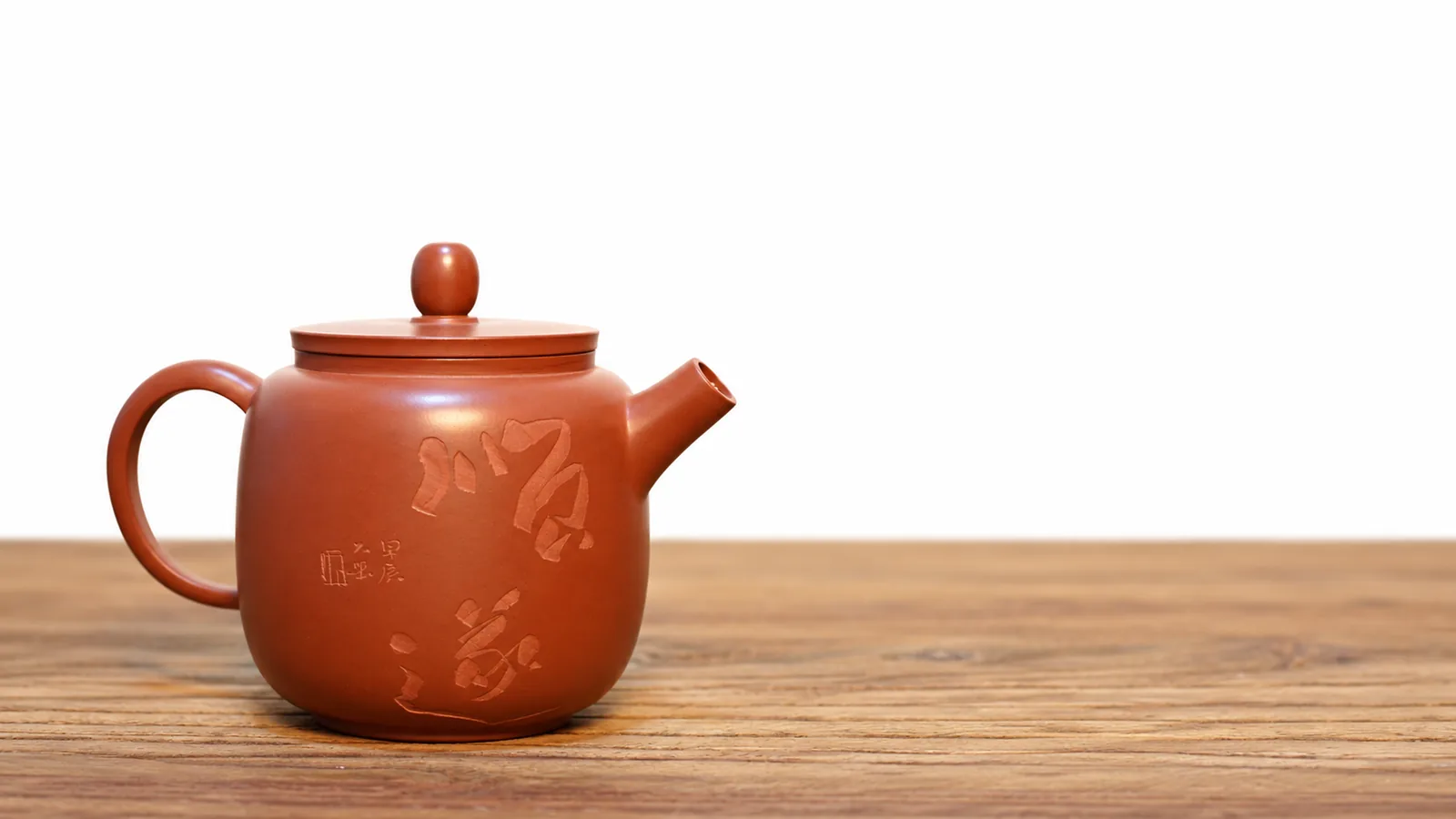
Nixing pottery comes from Qinzhou, on China’s Guangxi coast. Its clay tradition is linked to mineral-rich deposits around the Qinjiang River. The clay is prepared from local raw materials, then shaped and fired into unglazed teaware. The result is neither porcelain nor glazed stoneware: the surface remains clay, allowing its texture and patina to develop through regular use.
Fine, Unglazed Clay Without Chemical Additives
Every Nixing Ware piece is bare-fired and unglazed. Whether a form is made by hand, press molding, or slip casting, the fine original clay does not require chemical additives. Responsible clay preparation begins with tightly controlled raw-material sourcing and batch testing, so the material used for tea ware is carefully monitored.
Without a glaze layer, the clay surface is direct and tactile. With normal tea use, it may gradually gain a softer, deeper patina rather than remaining visually unchanged.
Dual Porosity, Heat Retention, and Tea Brewing
Nixing clay is valued for a fine dual-porosity structure: tiny pores help the vessel exchange air gently while the clay body holds heat. This does not replace good tea or careful brewing, but it can support a stable infusion, especially with fuller-bodied teas.
- Aged Liubao: steady heat suits its dark, mellow profile.
- Ripe pu-erh: a warm, rounded brewing environment works well with its rich texture.
- Wuyi rock tea: a compact pot can help maintain heat for roasted oolongs and repeated short infusions.
Crafting: From Clay to Teapot
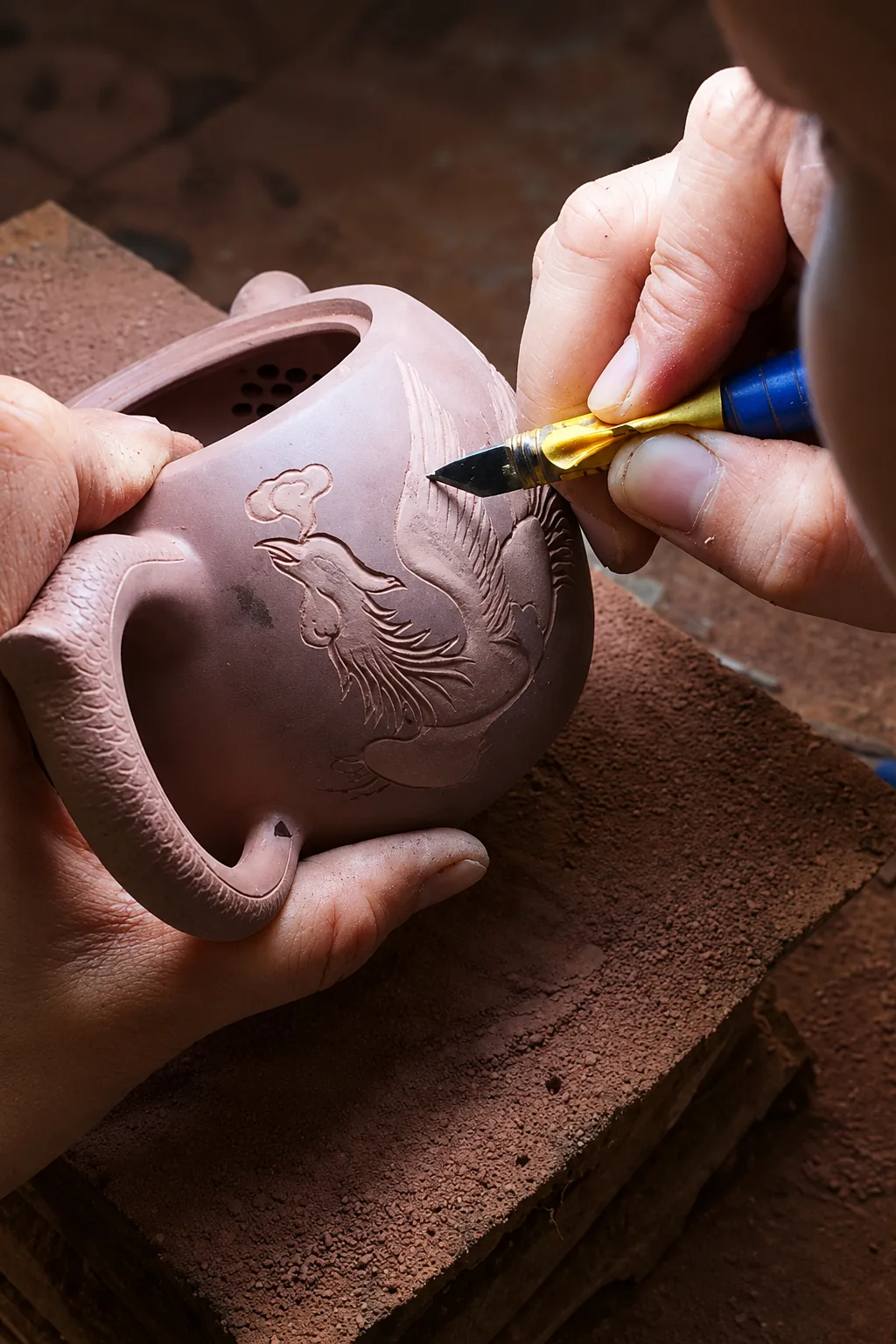
Nixing pottery can be formed by hand, press molding, or slip casting. The method affects the production process, but every successful tea vessel still depends on clay elasticity, wall thickness, lid fit, spout flow, trimming, and careful drying before firing. Hand-carved decoration is added before firing, when the clay is firm enough to hold a crisp line.
How Nixing Pottery Is Fired
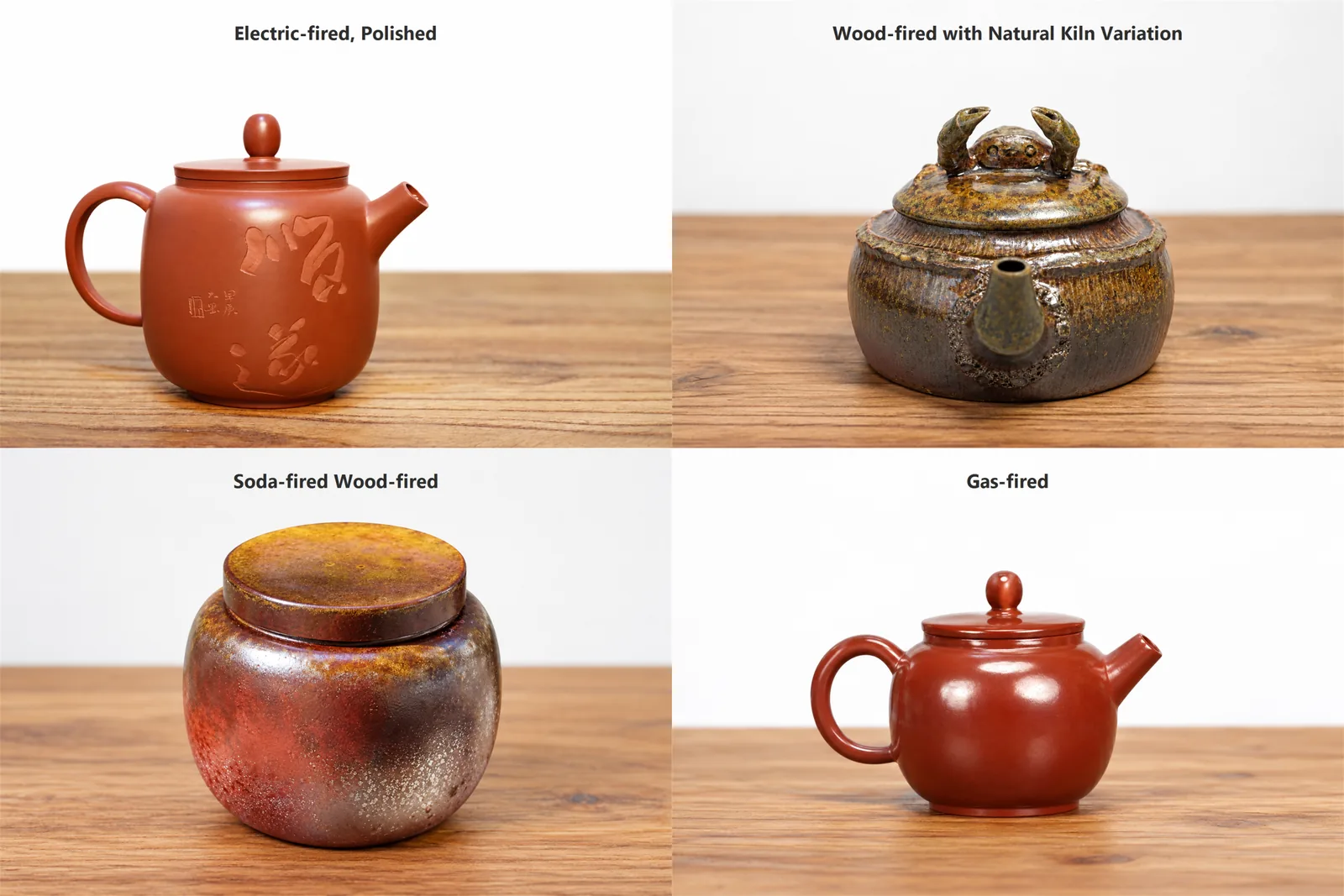
Firing method changes the appearance of a Nixing piece, but every method remains unglazed. It is important to use the terms precisely: only wood-fired Nixing pottery has natural kiln variation. Electric-fired, gas-fired, and soda-fired pieces should not be described as having kiln variation.
Electric-Fired
Electric firing offers controlled, repeatable heat. After firing, electric-fired Nixing pottery is usually hand-polished; some workshops carry out a second firing after polishing to make the surface smoother. This finish is not glaze.
Wood-Fired: Natural Kiln Variation
In a wood kiln, flame, ash, heat, and atmosphere move around the ware. Their interaction with the unglazed clay can create natural surface variation from one piece to another. At Nixing Ware, this wood-fired result is the only firing effect we call natural kiln variation.
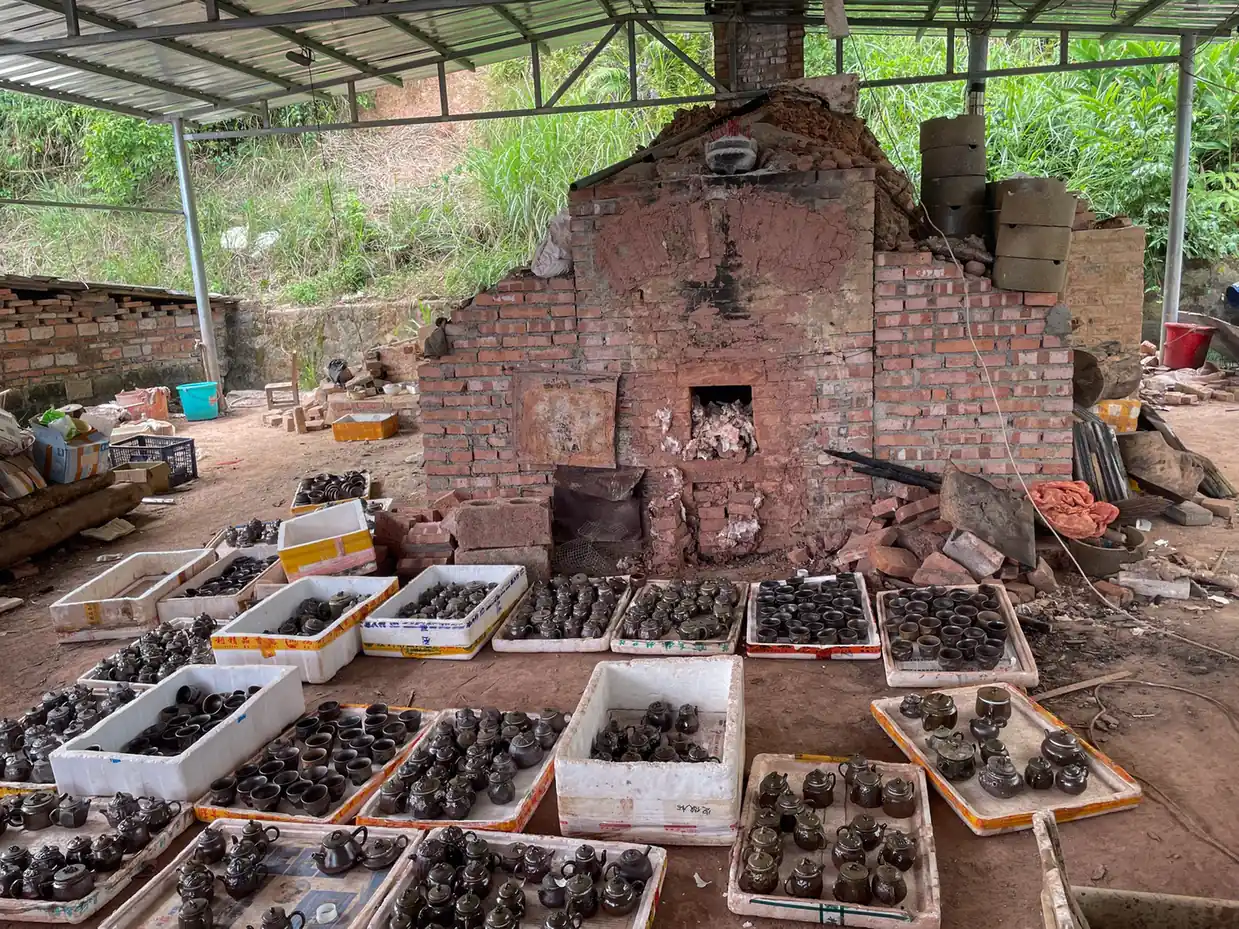
Soda-Fired Wood Firing
Soda firing is generally used with wood firing. Soda introduced during firing can create brighter color and a more vivid surface. It is a legitimate technique, and when a Nixing Ware teapot uses it, the product page will state this clearly.
Gas-Fired
Gas firing surrounds the ware with direct flame, which can produce a bright surface—sometimes brighter than an electric-fired piece. It is not glaze and it is not natural kiln variation.
Choosing Capacity for Your Tea Habit
Choose capacity around how you brew, not only around appearance. A smaller teapot is useful for focused gongfu sessions; a larger one suits a longer shared table session or tea that benefits from more water at once.
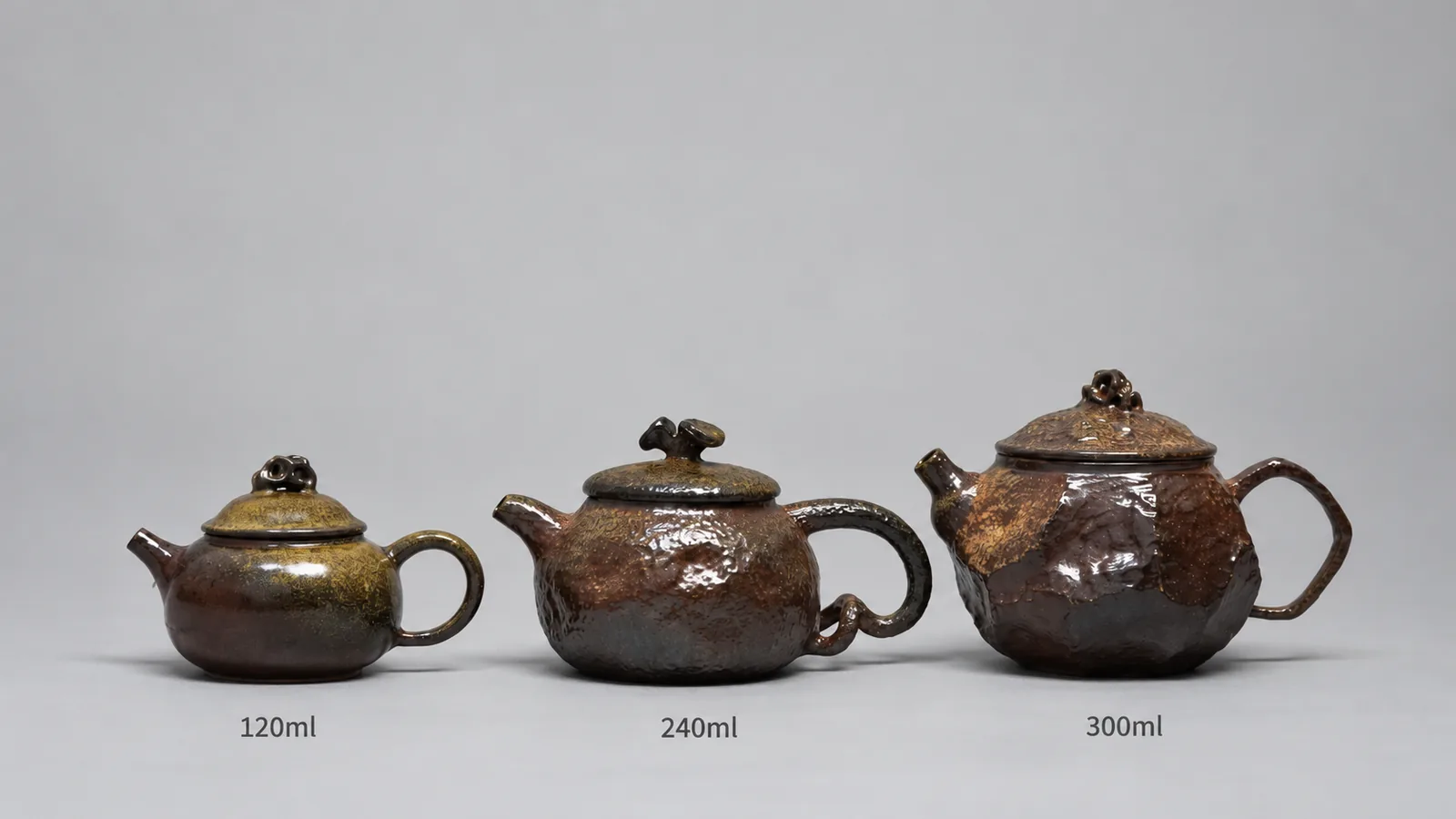
- 90–140 ml: a practical range for one or two people and concentrated gongfu brewing.
- 150–220 ml: useful for sharing with two to four people or for a relaxed daily pot.
- Match the tea: darker teas and roasted oolongs often reward a compact pot and short, repeated steeps.
First Use and Everyday Care
Unglazed Nixing pottery is simple to care for. Rinse it with hot water before its first use, then let it dry fully between sessions. Avoid detergents, abrasive pads, and sudden temperature changes. Use clean water, empty the pot after brewing, and allow air circulation before storing it. Over time, regular tea use can build a natural patina.
A Practical Clay for Everyday Tea
Nixing pottery brings together unglazed Qinzhou clay, thoughtful craftsmanship, and several distinct firing approaches. When choosing a piece, consider the maker’s form, capacity, firing method, and the teas you brew most often. For a closer comparison with another Chinese clay tradition, read our guide to Nixing pottery and Yixing zisha.
Explore Nixing Ware teaware or contact Nixing Ware for help choosing a suitable piece.
Leave a Reply