Description
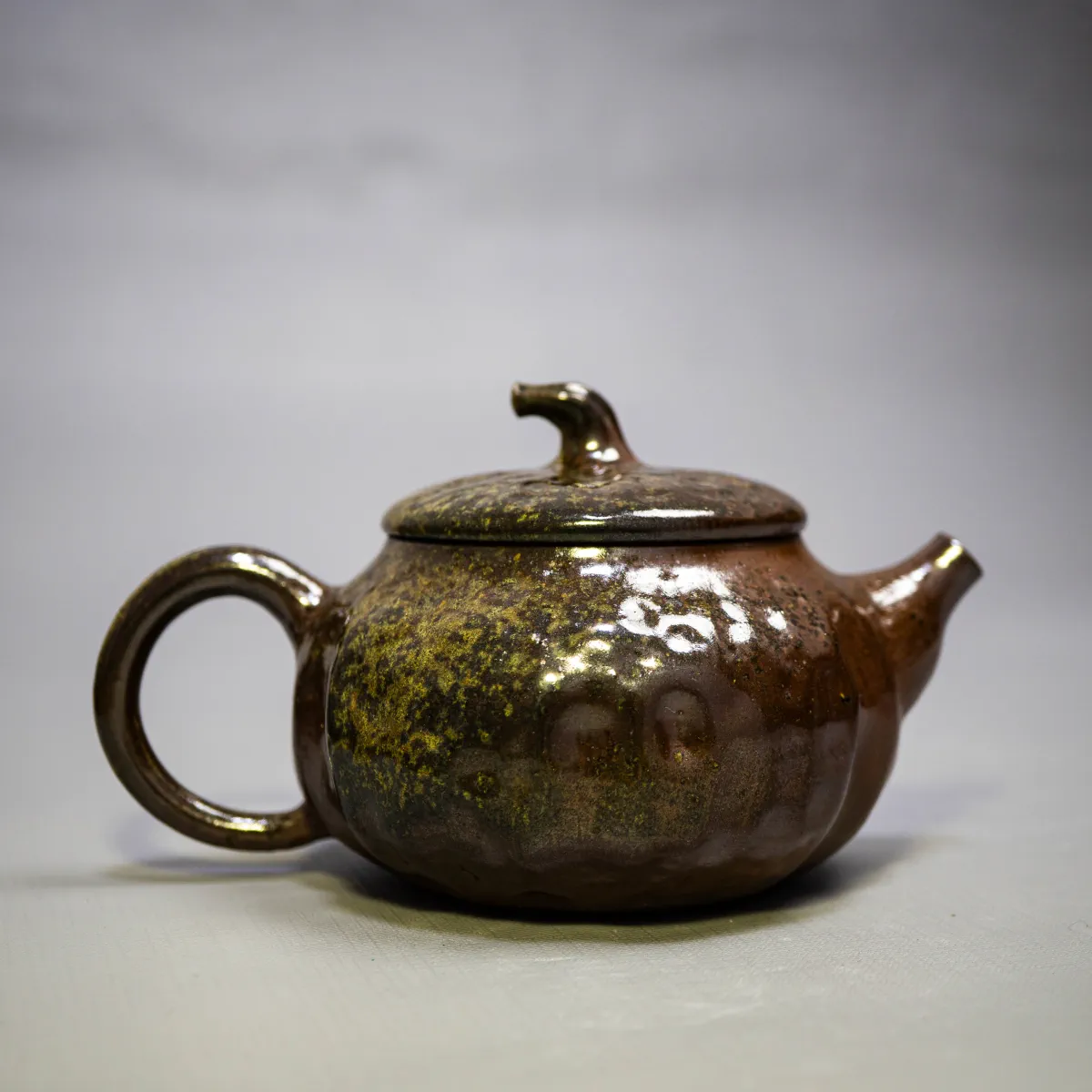
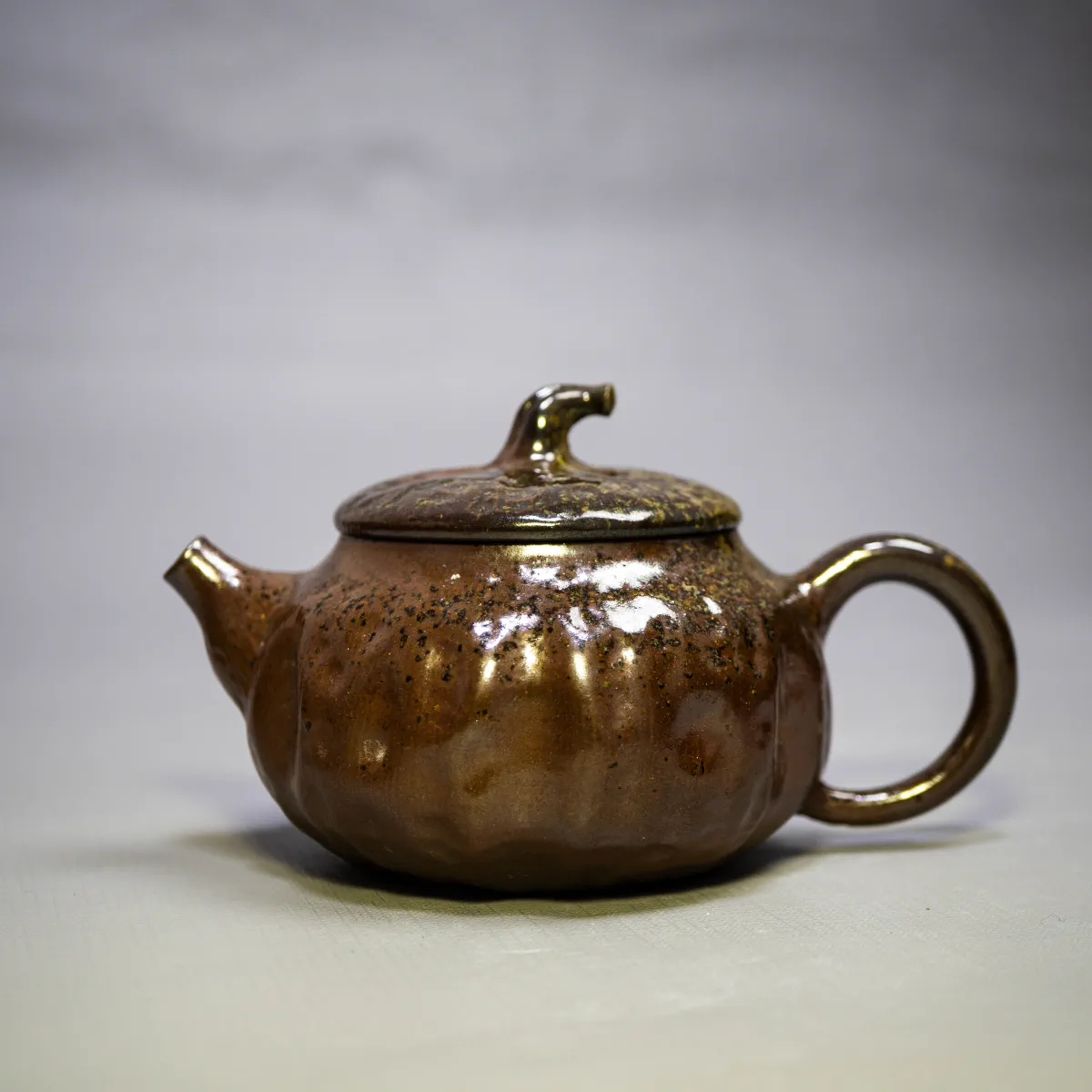
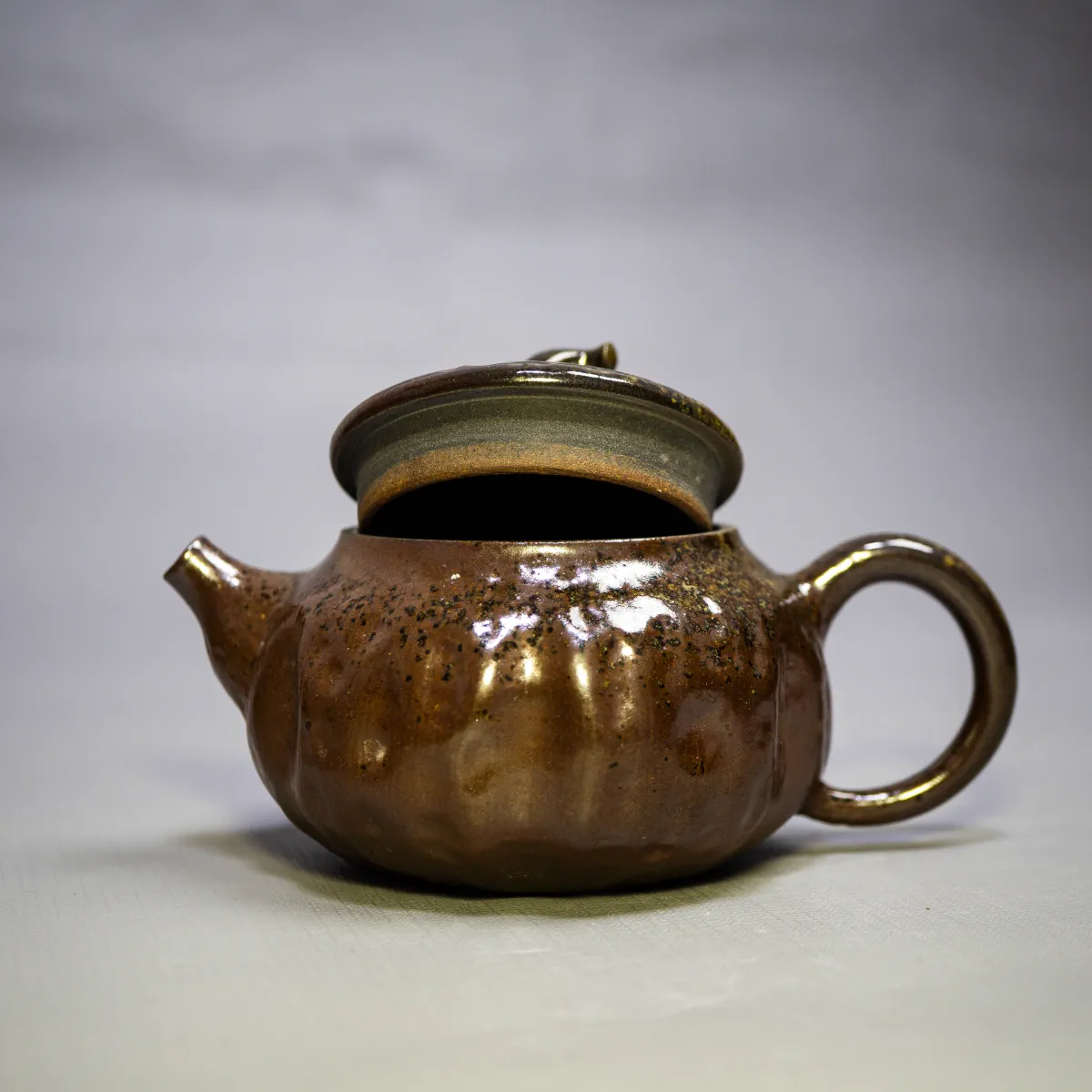
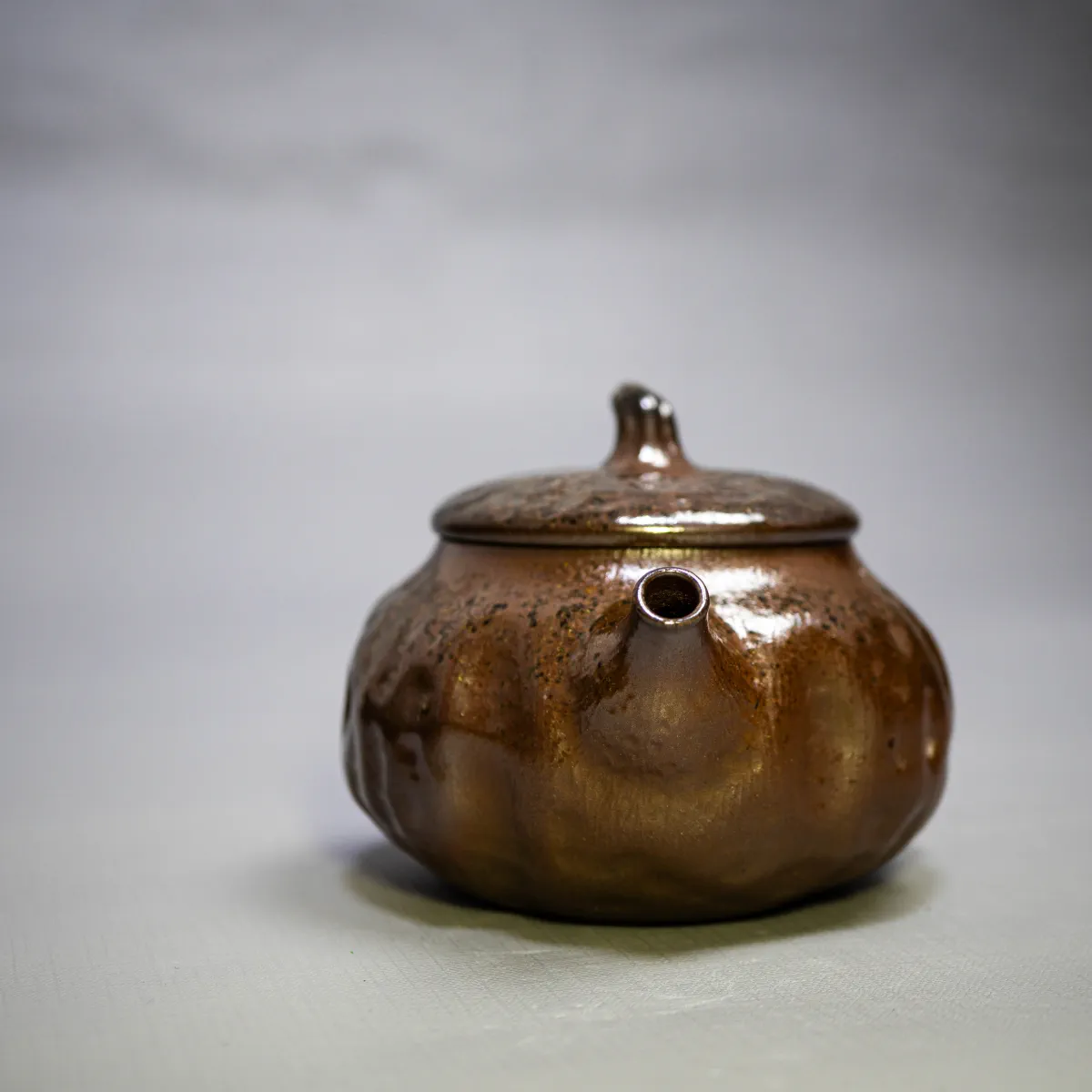
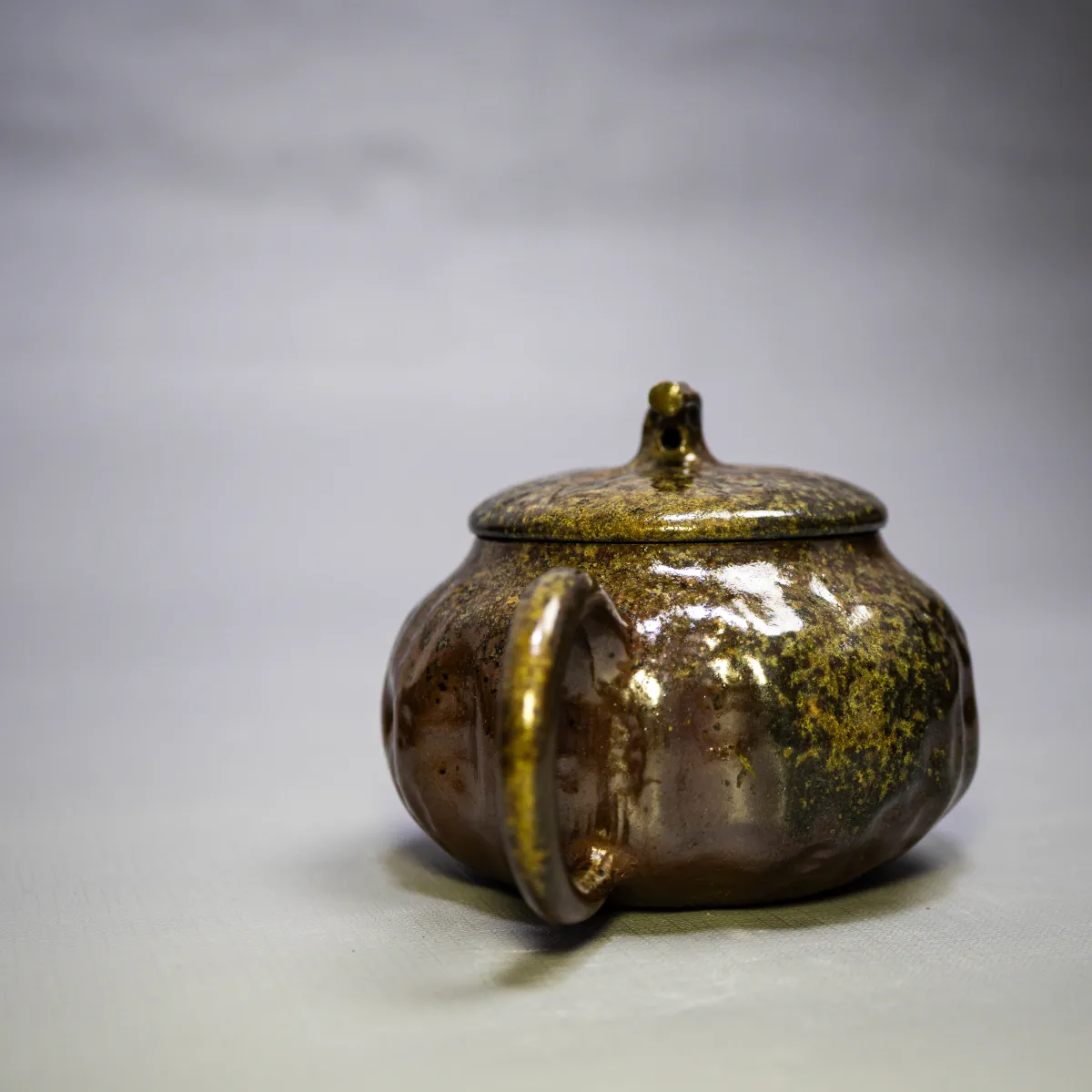
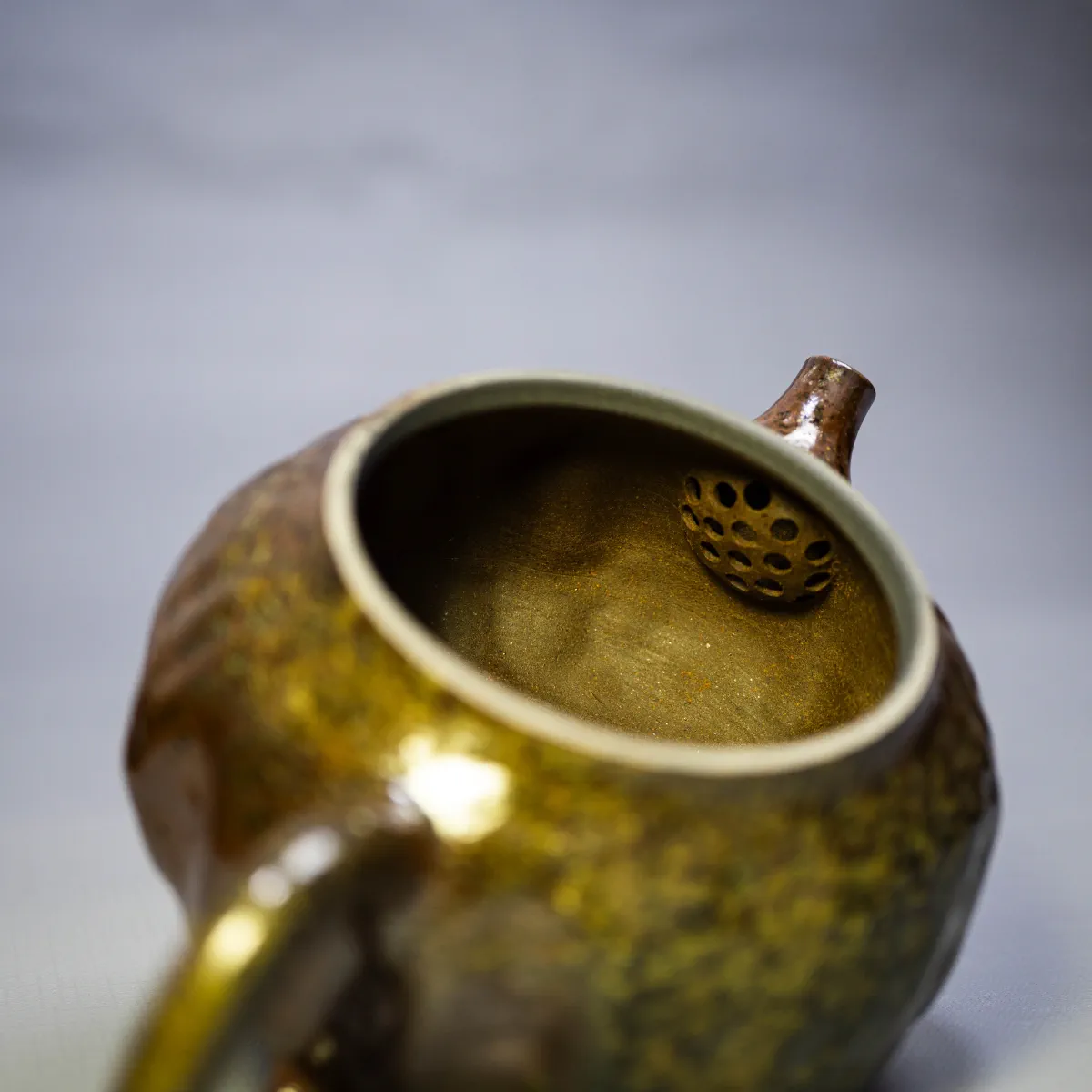
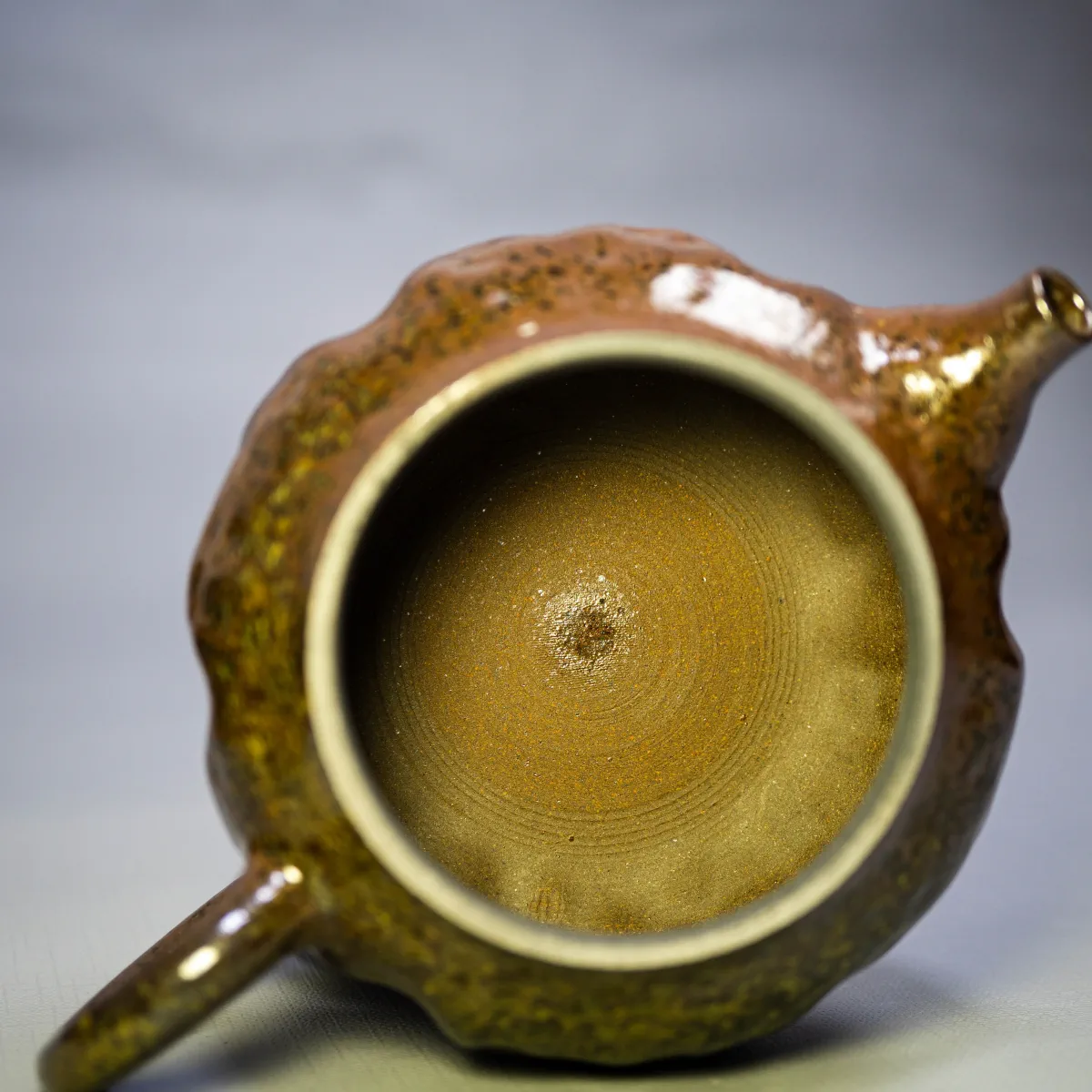
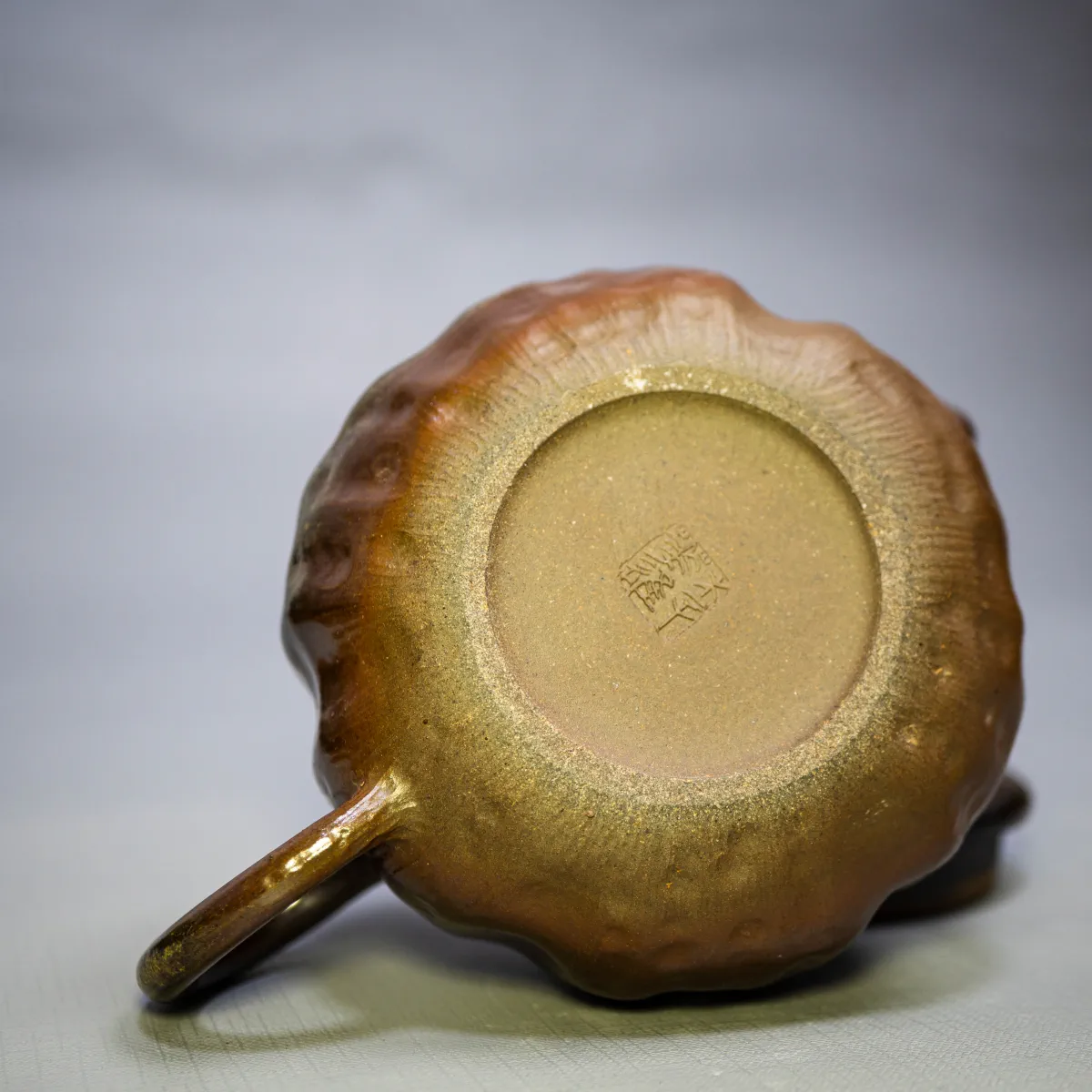
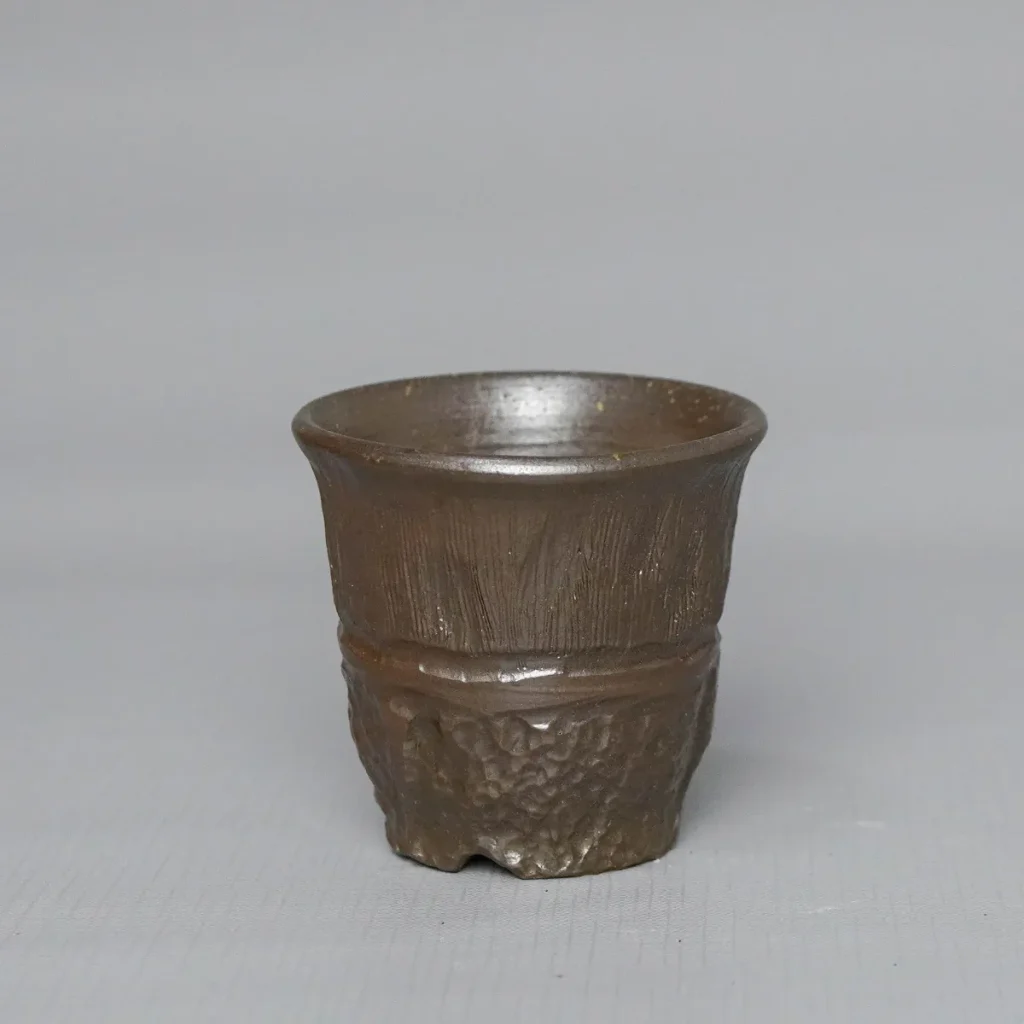
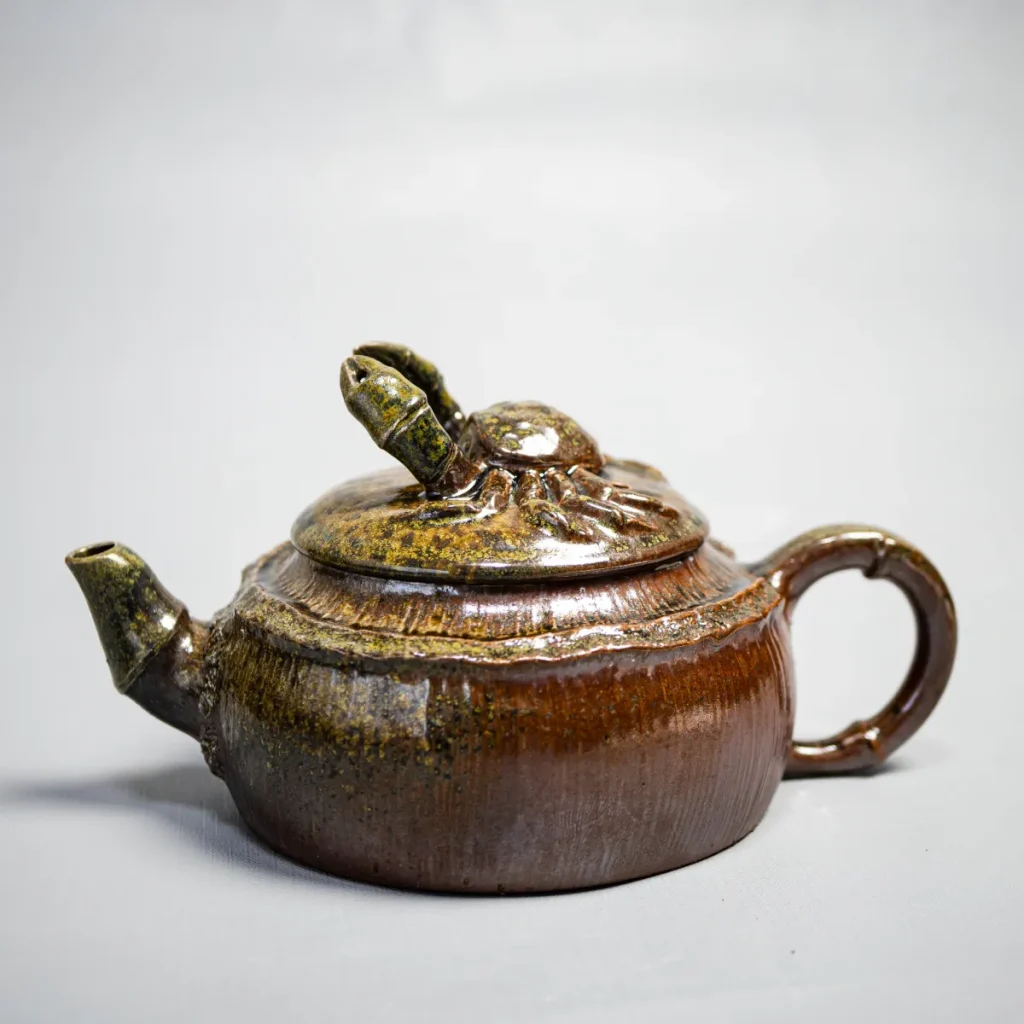
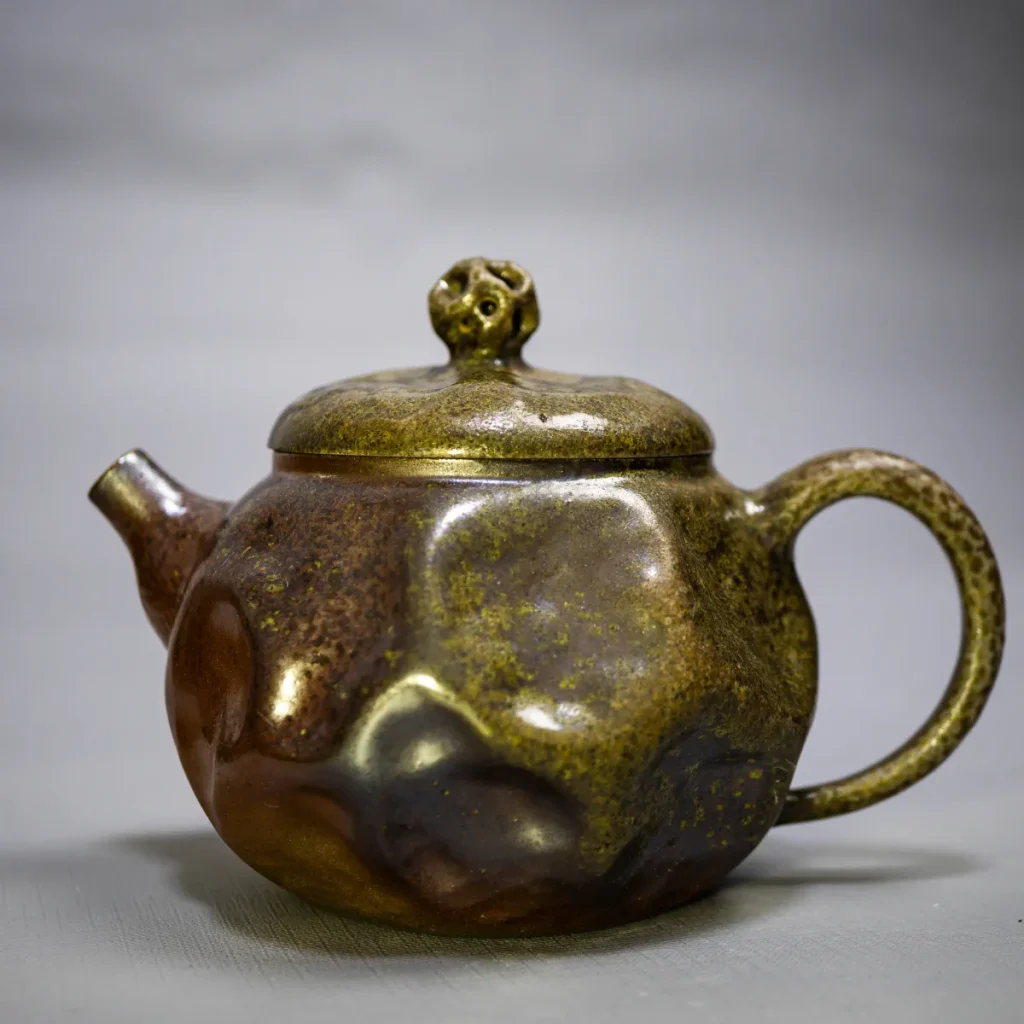
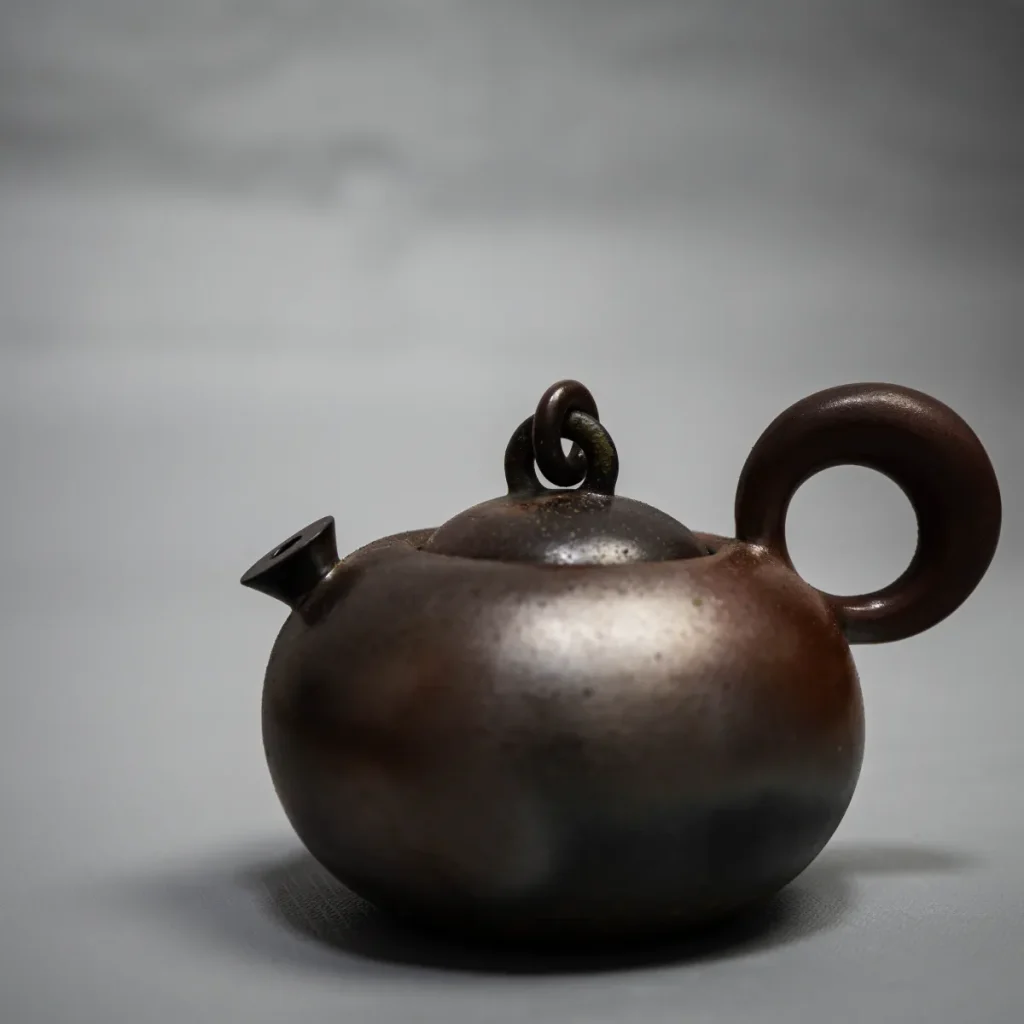
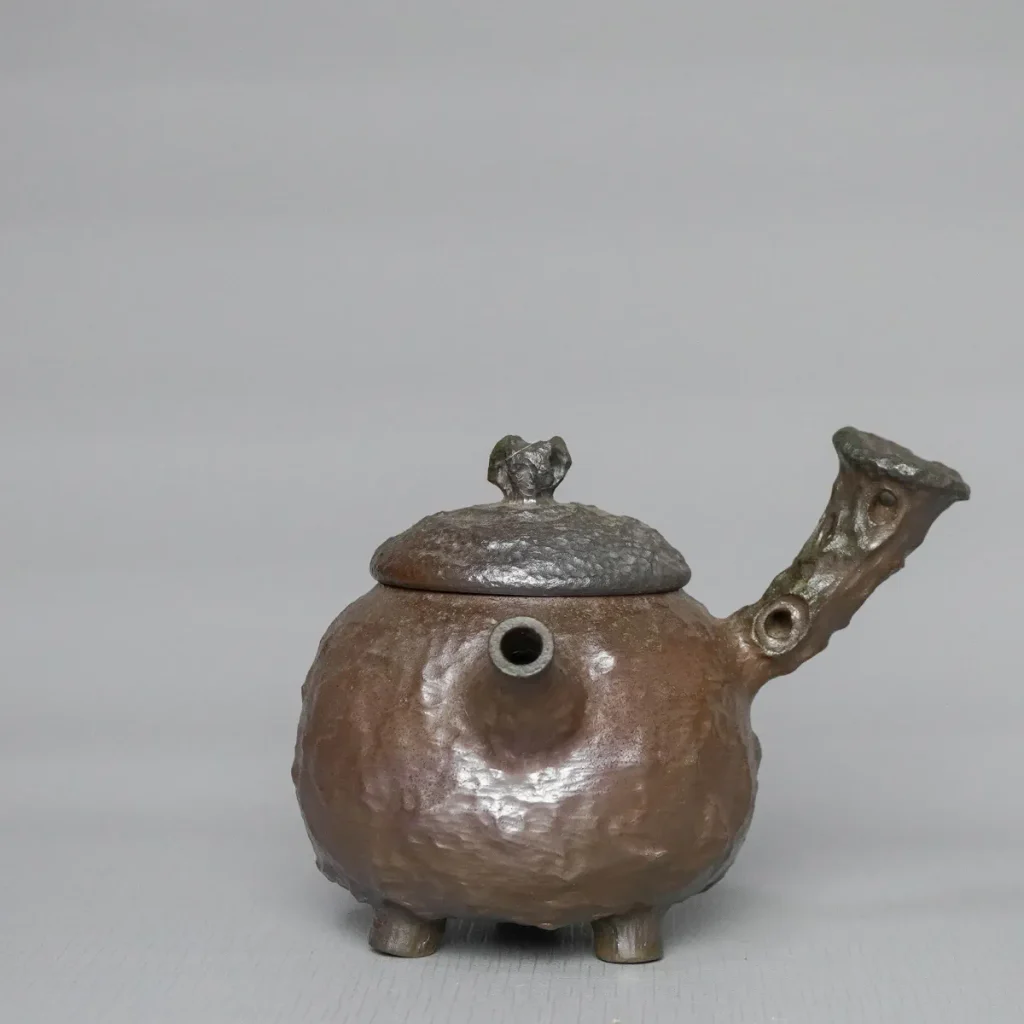
One of a kind. The photos show the exact teapot you will receive.
Volume: Approx. 180 mL
Form: Pumpkin Form (南瓜仿生)
Artisan: Li Huajin (李华进)
Firing: Unglazed, Pine Wood-Fired (无釉松木柴烧)
Origin: Qinzhou, Guangxi, China
A Pumpkin Form
Made by Li Huajin (李华进), this approximately 180 mL Nixing clay teapot takes its form from a pumpkin.
The rounded body is divided into soft lobes, while the lid knob and handle incorporate stem- and vine-inspired details. Together, these elements give the teapot a natural, sculptural character while retaining a functional form for everyday tea preparation.
Its 180 mL capacity is suited to a personal gongfu tea session or to sharing tea with one or two other people.
Unglazed Pine Wood Firing
This teapot was fired without an applied glaze in a pine wood-fired kiln. During firing, flame, heat, wood ash, and kiln atmosphere interact with the clay surface, creating natural variation in colour, sheen, and texture.
The resulting surface is unique to this individual piece. Subtle shifts in colour, textured areas, and natural kiln marks are part of the character of unglazed wood-fired pottery and can be seen in the photographs of this exact teapot.
Note: Surface variation is a natural feature of unglazed wood-fired pottery. Please refer to the product photographs for the specific character of this one-of-a-kind piece.
Qinzhou Nixing Clay
This teapot is made from Nixing clay from Qinzhou, Guangxi, a long-established pottery region in southern China. The final appearance of Nixing pottery can vary with the clay, shaping process, firing conditions, kiln placement, and surface treatment.
To learn more about the material and craft, explore our Nixing Pottery: Clay, Crafting & Firing Guide.
Before First Use
No elaborate “opening” process is required. Before your first tea session:
- Rinse the teapot gently inside and out with warm water.
- Warm the teapot gradually with warm-to-hot water.
- Empty the water, then allow the teapot to cool naturally before brewing tea.
After each use, remove the tea leaves, rinse with warm water, and allow the teapot to dry completely with the lid off before storing. Avoid sudden temperature changes, harsh detergents, and abrasive cleaning tools. For more guidance, see Caring for Nixing Pottery: Cleaning, Brewing, and Everyday Use.
Reviews
There are no reviews yet.