If you are interested in Chinese tea ware, you may already know Yixing zisha teapots. Nixing pottery—also called Nixing ware or Nixing Tao—is another distinct Chinese pottery tradition worth exploring.
Both are used for tea, and both can be valued for craftsmanship, form, and the pleasure of daily brewing. But they are not the same. They come from different regions, use different regional materials, and should be described honestly as separate traditions.
This guide compares Nixing pottery and Yixing zisha to help you choose a teapot based on your tea preferences, brewing style, capacity needs, and budget.
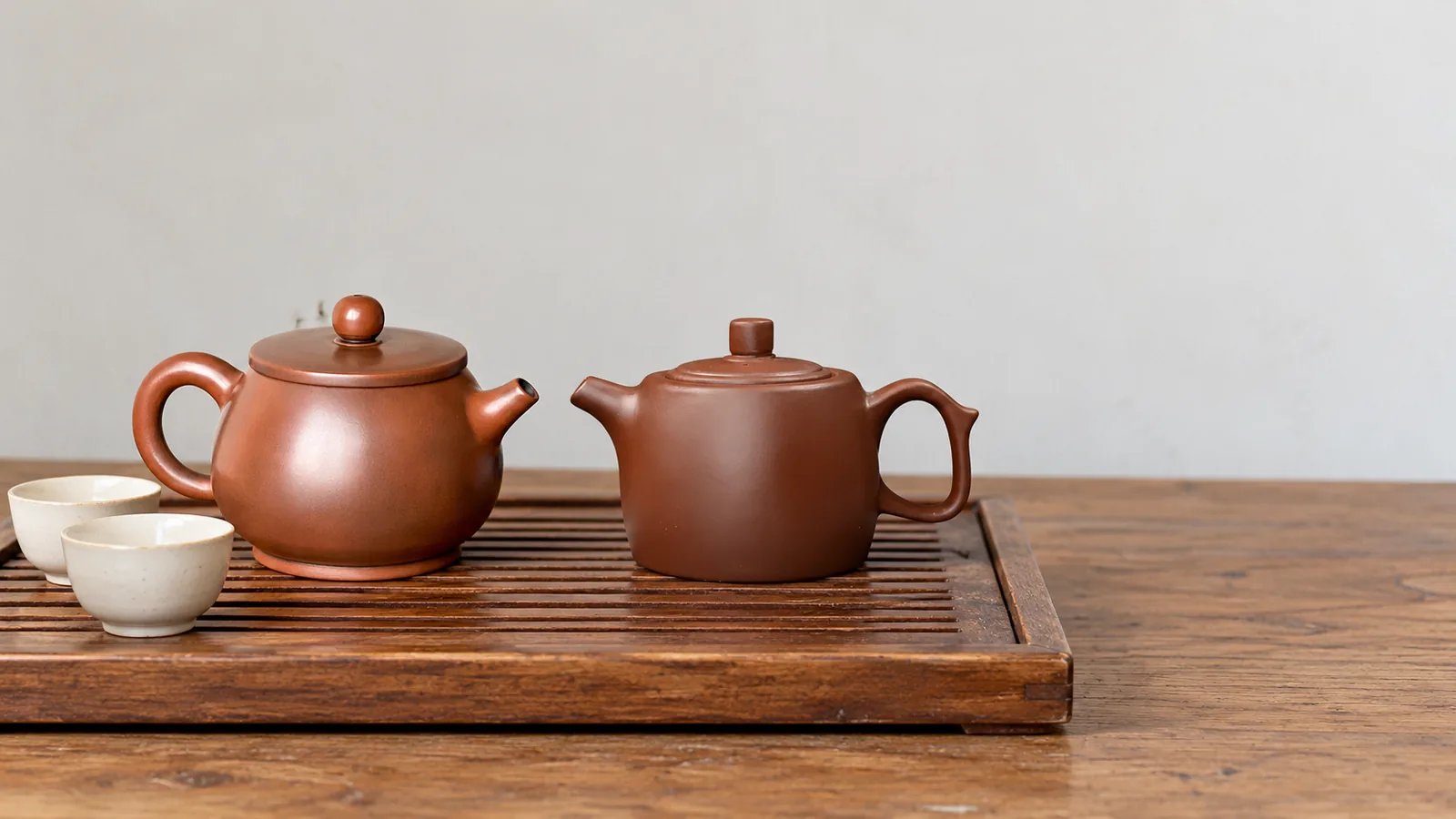
Nixing Pottery and Yixing Zisha at a Glance
| Feature | Nixing Pottery | Yixing Zisha |
|---|---|---|
| Origin | Qinzhou, Guangxi, China | Yixing, Jiangsu, China |
| Material | Pottery clay associated with the Nixing tradition of Qinzhou | Zisha clay associated with the Yixing region |
| Appearance | Can range from warm reddish-brown to dark tones; often features distinctive forms or carved decoration | Often seen in purple-brown, red, or lighter clay tones; known for compact teapot forms and clay texture |
| Making | May be hand-thrown, hand-finished, carved, or made through other pottery processes | May be fully handmade, half-handmade, or mold-formed, depending on the piece |
| Suitable tea use | Chosen according to the specific pot, tea type, and personal brewing preference | Also chosen according to the individual pot, tea type, and personal brewing preference |
| Care | Rinse with water, avoid soap, and dry thoroughly | Rinse with water, avoid soap, and dry thoroughly |
| Price | Varies by material, craftsmanship, design, size, and maker | Varies by clay, craftsmanship, maker, age, and collectibility |
| Best for | Tea drinkers seeking Nixing craftsmanship, expressive design, or a daily gongfu tea vessel | Tea drinkers drawn to the Yixing zisha tradition, classic small-pot brewing, or collecting |
The key point is simple: Nixing pottery is not Yixing zisha, and Yixing zisha is not Nixing pottery.
Different Regions, Different Traditions
Nixing pottery comes from Qinzhou, Guangxi, in southern China. It is a regional pottery tradition with its own materials, methods, forms, and artistic expression.
Yixing zisha comes from Yixing, Jiangsu, in eastern China. It is widely known for small teapots used in gongfu-style tea brewing.
Because both may appear under broad terms such as “Chinese clay teapot” or “gongfu teapot,” it is easy for new tea drinkers to confuse them. However, a teapot should be identified by its actual origin and material—not labeled as Yixing simply because Yixing zisha is more familiar in international tea markets.
Material and Surface: Look Beyond Color
The color of a teapot alone does not tell you everything about its material, quality, or brewing behavior.
Nixing ware uses clay associated with the Qinzhou Nixing tradition. Depending on the individual piece, firing, finishing, and design, its surface may appear reddish-brown, dark brown, gray, or nearly black.
Yixing zisha is associated with clay from the Yixing area. It is often discussed through names such as zisha, zini, hongni, and duanni. These terms should be used carefully: color or online product photos alone are not enough to verify a clay type or authenticity.
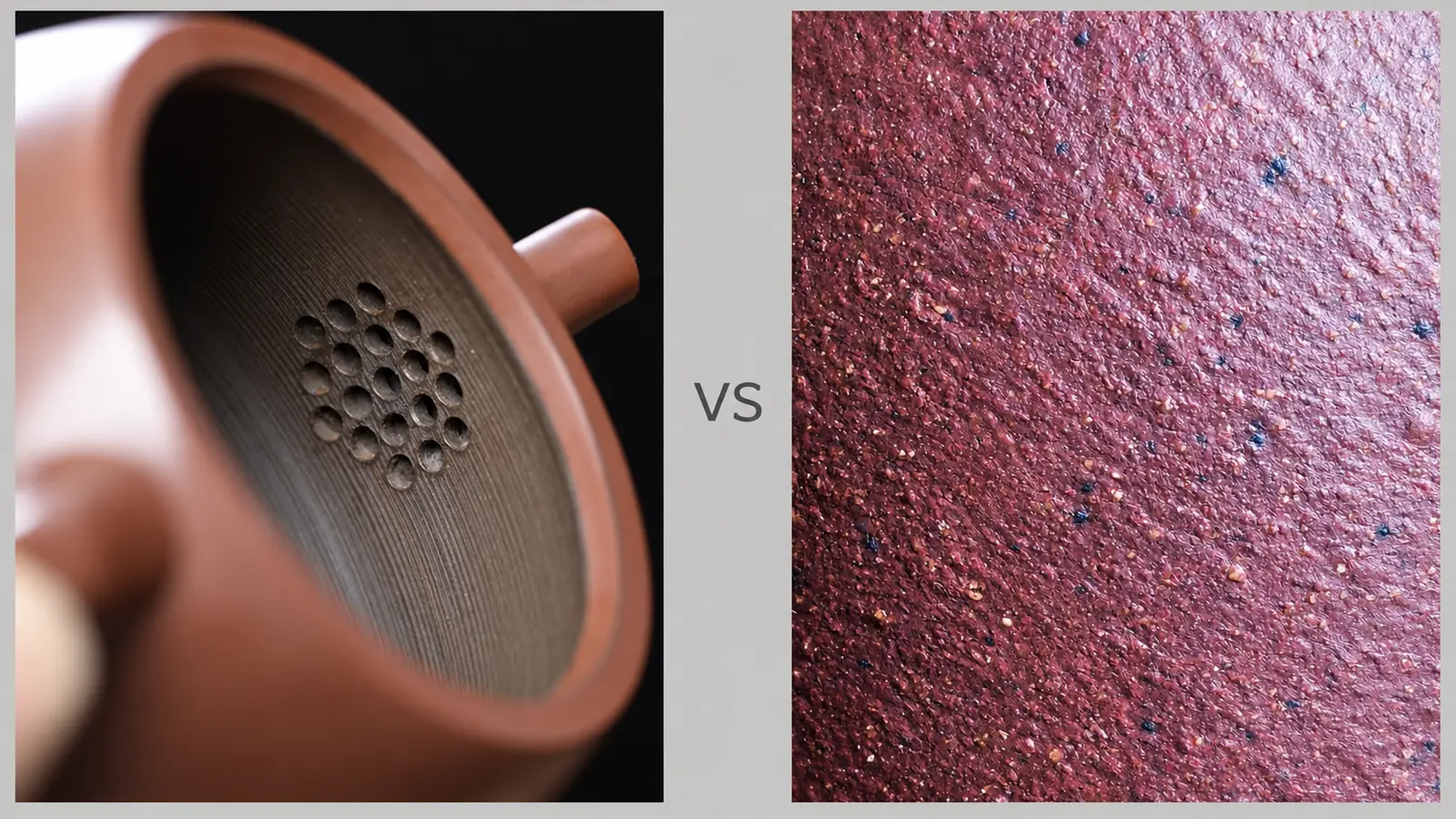
It is best not to assume that one clay is always more porous, more breathable, or better for every tea. The final brewing experience is influenced by the specific material, firing, wall thickness, pot shape, interior finish, water, tea leaves, and your own brewing method.
Appearance and Craftsmanship
Both Nixing and Yixing tea ware can be simple, functional, decorative, or highly artistic.
Nixing pieces are often appreciated for their varied surfaces and expressive craftsmanship. Some are plain and form-focused, while others feature hand-carved scenes, calligraphy, or traditional motifs.
Yixing zisha teapots are often recognized for compact, balanced forms and the visual character of the clay. They can also be engraved or decorated, but many tea drinkers appreciate their restrained and practical designs.
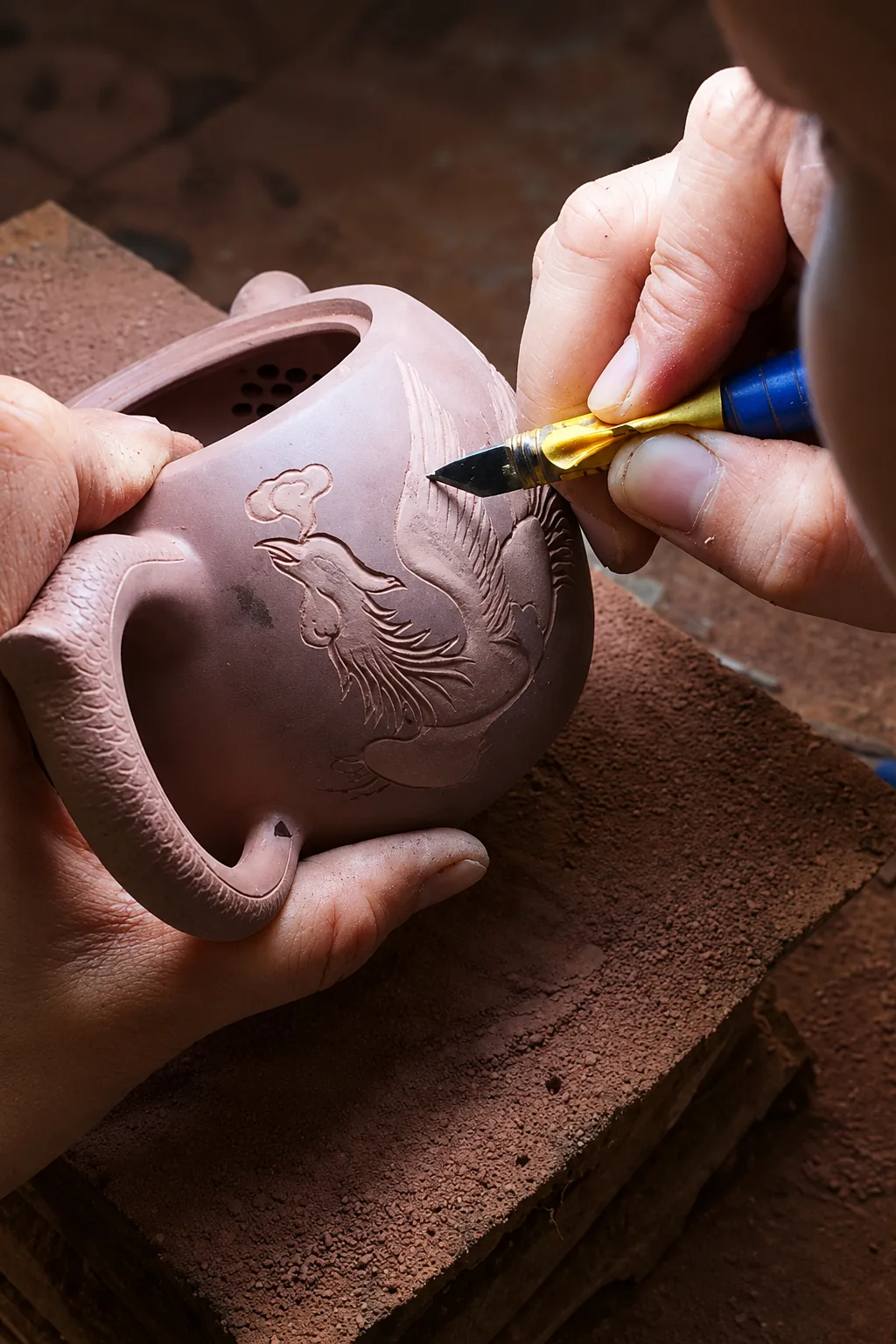
“Handmade” can describe different levels of handwork. A pot may be fully handmade, hand-finished after molding, or produced with some mechanical assistance. When shopping, look for clear product details about production method, interior finish, capacity, and place of origin.
Which Teas Can You Brew?
There is no universal rule that says Nixing or Yixing is only suitable for one type of tea. The right pairing depends on the individual vessel and your taste.
Many tea drinkers use smaller clay teapots for teas they brew regularly, such as:
- Oolong tea
- Black tea
- Pu-erh tea
- Dark tea
- Roasted or aromatic loose-leaf teas
If you drink many strongly different teas, such as floral teas, scented teas, roasted oolongs, and ripe pu-erh, you may prefer separate brewing vessels. Porcelain, glass, and glazed tea ware are also useful when you want easy cleaning and greater flexibility.
Rather than asking which clay is “best,” ask:
- Which teas do I drink most often?
- Do I want one pot for daily use or separate pots for different tea families?
- Do I brew alone, for two people, or for a group?
- Do I value decoration, classic form, daily practicality, or collectibility most?
Choosing the Right Capacity
Capacity is one of the most practical factors when choosing a teapot.
For gongfu tea, smaller pots are often used for concentrated, short infusions. Larger pots can be more convenient for sharing tea or for casual daily brewing.
| Capacity | A Practical Starting Point |
|---|---|
| 120 ml | A good size for solo gongfu tea or a small session for one to two people |
| 240 ml | A flexible size for sharing tea with two to four people |
| 300 ml | A practical option for serving several people or brewing a larger volume at once |
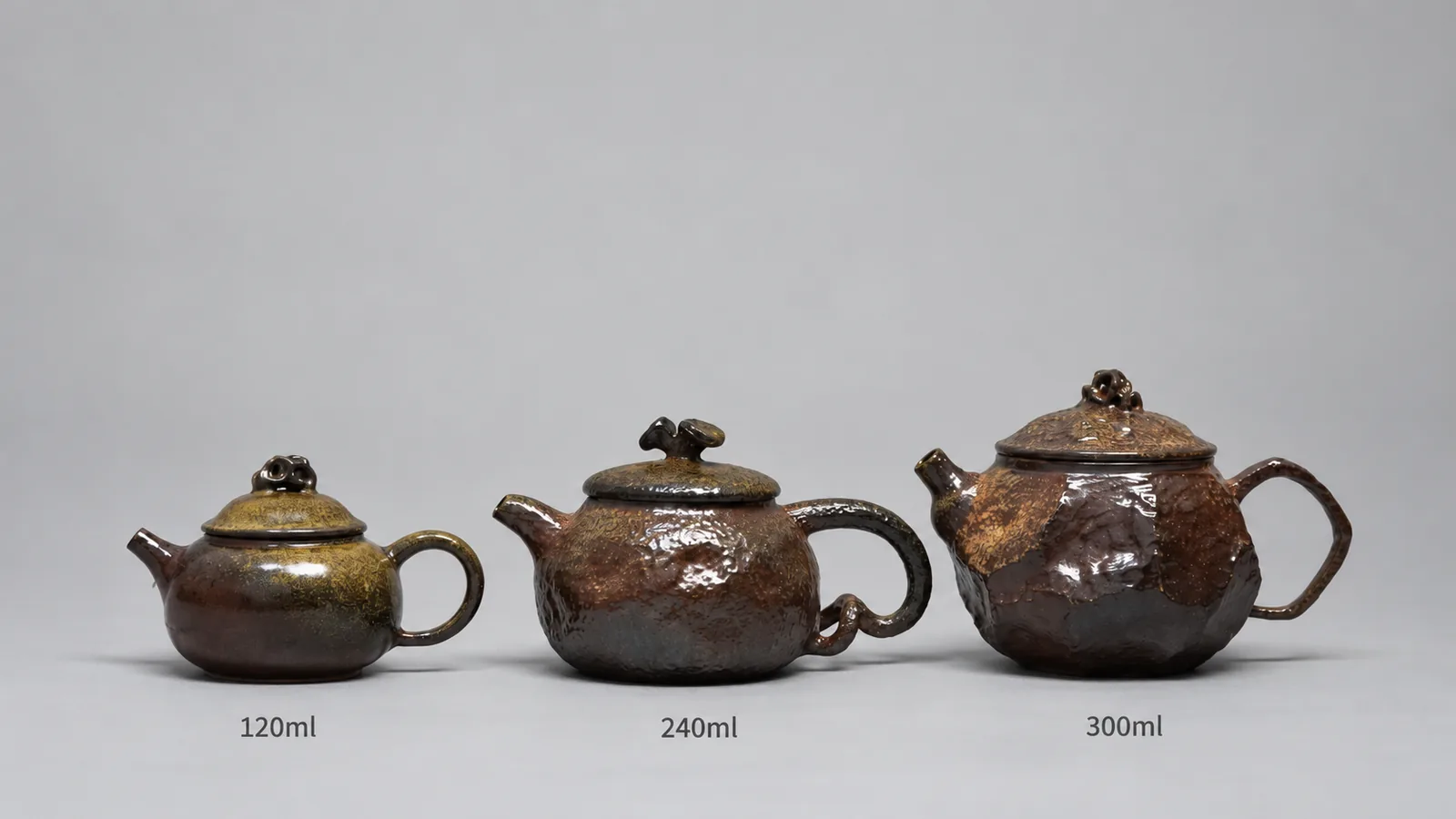
These are practical starting points, not strict rules. The right size also depends on how much leaf you use, your preferred infusion style, and the number of people at your tea table.
Care: Keep It Simple
For both Nixing pottery and Yixing zisha, simple care is generally best:
- Rinse the teapot with hot water before and after use.
- Avoid dish soap, scented cleaners, and abrasive scrubbers.
- Remove tea leaves after the session.
- Allow the teapot to air-dry completely.
- Store it in a dry, odor-free place.
If the inside of a pot is glazed, follow the seller’s care instructions for that specific piece. For further guidance, read our guide to caring for Nixing pottery.
Price and Buying with Confidence
Nixing and Yixing tea ware are both available across a wide range of prices. Price may reflect material sourcing, craftsmanship, the amount of handwork, carving, maker reputation, size, rarity, and retail support.
For a first purchase, choose a pot with clear information and a capacity that fits your real tea-drinking habits. Be cautious of unsupported claims about rare clay, guaranteed changes in tea flavor, historical status, or health benefits.
Nixing vs Yixing: Which One Should You Choose?
Choose a Nixing pottery teapot if you:
- Want to discover a tea tradition beyond the better-known Yixing category
- Enjoy distinctive forms, darker or warmer surfaces, or hand-carved decoration
- Want a teapot for regular gongfu-style brewing
- Value transparent product information and individual craftsmanship
Choose a Yixing zisha teapot if you:
- Are specifically interested in the Yixing zisha tradition
- Enjoy classic small-teapot gongfu brewing
- Want to develop a dedicated tea-brewing routine
- Have found a trusted seller and a pot suited to your needs
Choose porcelain, glass, or glazed tea ware if you want one flexible vessel for many tea types or prefer easier cleaning.
Explore Nixing Ware Teapots
Find a Nixing pottery teapot that fits the way you drink tea—whether you prefer a compact 120 ml pot for solo gongfu sessions, a 240 ml pot for sharing, or a larger 300 ml pot for a relaxed tea table.
Browse Nixing Ware Teapots
Learn About Nixing Pottery
Ask About Teapots and Wholesale
FAQ
Is Nixing pottery the same as Yixing zisha?
No. Nixing pottery is associated with Qinzhou, Guangxi, while Yixing zisha comes from Yixing, Jiangsu. They are distinct pottery traditions.
Is Nixing better than Yixing?
Neither is universally better. The right choice depends on your tea preferences, brewing habits, design taste, budget, and confidence in the seller’s product information.
Can I use a Nixing teapot for different teas?
Yes. However, if you use an unglazed pot, many tea drinkers prefer to use it consistently for one tea family or a small group of similar teas.
What Nixing teapot capacity should I choose?
A 120 ml pot is a useful starting size for solo gongfu tea; 240 ml is more flexible for sharing; and 300 ml is suitable when serving several people or brewing a larger volume.
Leave a Reply